Estimated reading time: 12 minutes
Have you ever found yourself at a bustling café, and as you’re about to pay for your artisan toast, the barista looks up and says, “Sorry, we don’t take cash anymore? It’s a relatable tension! The reality is that, now more than ever, businesses need to adapt to the changes in transactions. The digital shift points more than ever to a great opportunity: virtual payments.
Not that cafés will be shifting to online payments only, but accepting virtual payments has moved from being a niche offering to a necessity for survival and growth in many industries.
So what exactly does this mean for your business?
A decade ago, many business owners treated remote payments like a side feature. Something reserved for eCommerce giants, software companies, or businesses selling questionable supplements at 2 a.m. on cable television. Then, customer behavior changed faster than most operational systems could keep up with.
The rise of virtual payment processing is reshaping transactions. As a result, it has become crucial for business owners to understand how to implement virtual payments seamlessly. You may or may not be keen on the digital changes our world is pressing for. But it doesn’t matter. Your customers expect it.

What Are Virtual Payments?
McKinsey reported that the global payments industry processed 3.4 trillion transactions in 2023, reflecting how quickly businesses and consumers continue shifting toward digital payment channels. Digital and remote payment infrastructure is growing rapidly. For many merchants, that includes remote payment tools like virtual terminals, payment links, and mobile payment systems.
Virtual payment methods for businesses refer to any payment made electronically without a physical exchange of cash or a customer physically inserting a card into a countertop terminal.
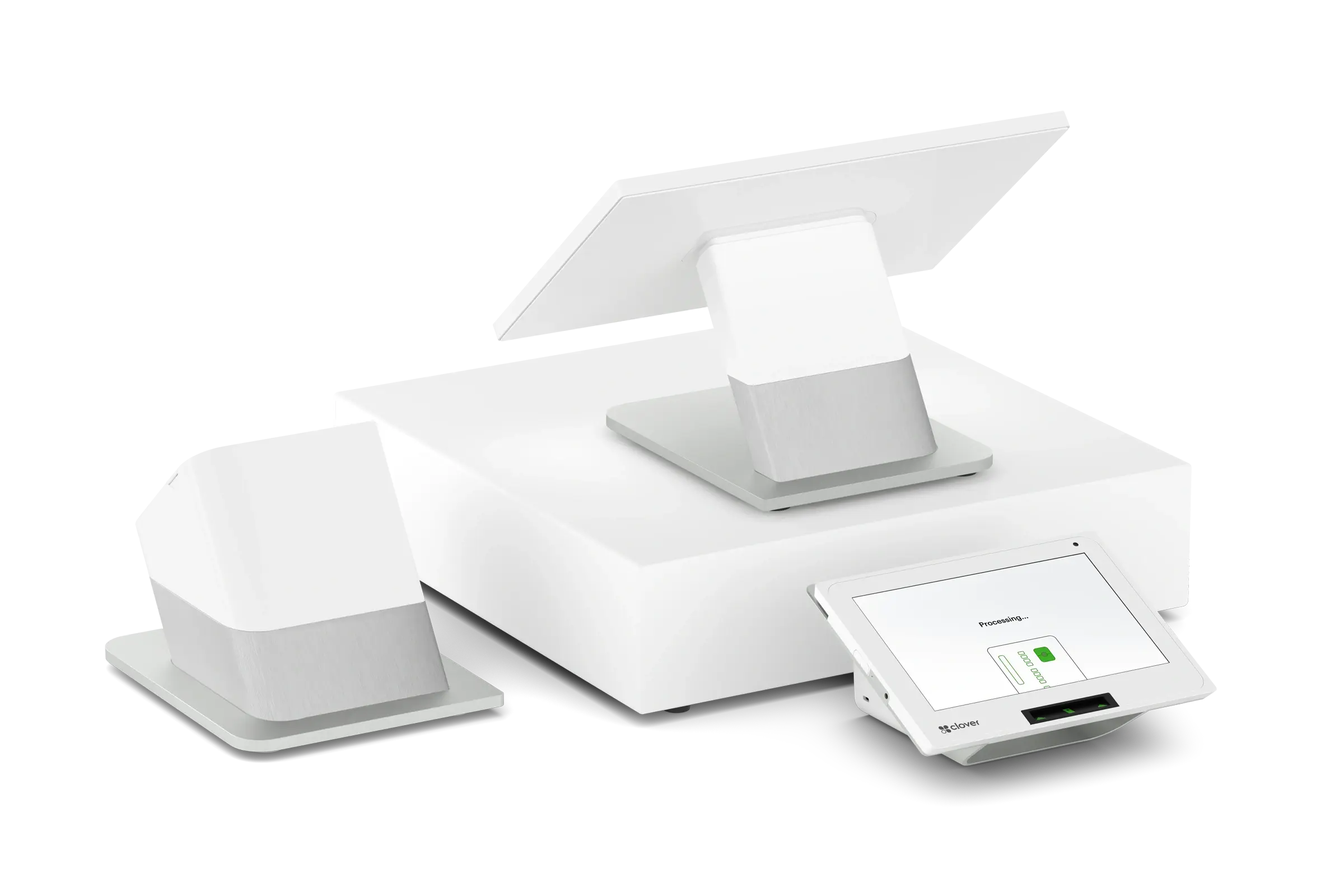
Check out our bestselling Clover terminals.
That includes:
- Online invoices
- Payment links
- Virtual terminals
- Mobile payment apps
- ACH transfers
- Digital wallets
- Recurring billing systems
The difference between traditional and virtual payment processing comes down to where the transaction happens and how payment data is collected. In-person payment processing usually involves hardware sitting on a counter. Virtual payment processing happens remotely through software, cloud-based systems, or connected payment tools.
Customer expectations have changed dramatically just in a few short years. People want payment flexibility in the same way they want flexible communication. They expect to be able to pay by text, email, online portal, or mobile device.
Benefits of Virtual Payment Processing
Adopting virtual payment processing is a game changer in many respects. The Federal Reserve’s 2024 Survey and Diary of Consumer Payment Choice found that customer payment expectations are changing faster than many business systems are adapting. But with so many benefits, it’s time to make the switch.
Faster Payment Collection
For a start, it leads to faster payment. No more chasing down payments. Customers want to get their shopping over with quickly, and when you offer convenient payment options, people are less likely to abandon their carts.
Customer Experience
There is also the customer experience factor. A customer receiving a secure payment link while sitting on their couch at 8:30 p.m. is far more likely to complete payment immediately than someone being told to call back during office hours.
That behavioral shift matters more than many owners realize.
Virtual payments also create flexibility for businesses operating remotely, across multiple locations, or in the field. Service businesses especially benefit from remote payment processing because revenue collection can happen immediately after work completion instead of days later.
Minimizing Hardware Dependence
One of the most obvious benefits of digital payment solutions is that they reduce dependence on physical hardware, meaning card readers at a physical checkout, mobile payment terminals, and even payment solutions built into on-the-go staff phones. It does not mean hardware has to disappear entirely. But it does give your business flexibility in how and where transactions happen.
Cash Flow Visibility
Lastly, there is cash flow visibility. Digital systems make reporting, tracking, and reconciliation inherently easier…when integrated correctly. You and your staff can view paid and outstanding invoices, payment trends, and recurring revenue patterns in real time. You no longer have to piece together different spreadsheets.
5 Easy Ways to Accept Virtual Payments
Now that we understand what virtual payments are and their benefits to your business, it’s time to dive into how to accept virtual payments in 5 different formats.
1. Online Payment Portals
One of the simplest yet most effective tools in virtual payments is the online payment portal. These platforms allow customers to:
- manage their accounts
- manage recurring payments
- view invoices
- make payments at their convenience.
This is especially valuable for industries with recurring billing cycles, such as healthcare, property management, professional services, distributors, and contractors.
Online payment portals are a lifeline for both you and your customers.
Customers gain self-service convenience from the comfort of their couch, office, etc, while your business finds enhanced customer loyalty and reduced manual follow-up work.
2. Virtual Terminals
A virtual terminal allows your staff to manually enter card information through a secure web-based dashboard. No physical card reader is required.
This becomes incredibly useful and is one of the best ways to accept payments remotely or for businesses accepting payments over the phone.
Common examples include:
- Medical offices
- Home services
- Legal firms
- B2B suppliers
- Hospitality businesses
- Repair companies
A customer calls. Your employee securely enters payment information. The transaction processes immediately.
Simple.
Security concerns are one reason some businesses hesitate to expand remote payment collection. And that hesitation is completely understandable. Avoiding virtual payments isn’t the answer, however.
What matters is working with a processor that prioritizes compliance and secure transaction handling with a secure virtual payment processing system with encryption, PCI compliance support, and fraud prevention tools built in.
3. Payment Links
There is something even more efficient about payment links. These require absolutely no customer login, no app to download, and no awkward back-and-forth explaining how to pay an invoice.
You send a secure payment link through email or text. The customer clicks it and completes payment.
That simplicity is exactly why payment links have exploded across service industries.
For smaller businesses, especially, payment links solve a practical operational problem: they reduce the gap between completing a job and collecting revenue.
- A landscaping company can finish its work and text a payment request immediately.
- A consultant can invoice right after the client leaves their meeting.
- A repair technician can collect payment before driving away from the job site.
This shortens payment cycles while reducing administrative follow-up.
Customers also tend to appreciate the flexibility. People increasingly expect payment experiences to feel quick and mobile-friendly because nearly every other digital interaction in their lives already works that way.
The fact of the matter is, convenience has become a trust signal. Clunky payment processes can make businesses appear outdated or disorganized, even if the actual service is exceptional.
4. Mobile Payment Processing
Mobile payment processing has made it possible for businesses to operate outside of traditional storefronts. Customers can pay with their smartphones and merchants can TAKE payments with theirs. Modern mobile payment solutions support contactless payments, digital wallets, and chip card acceptance while syncing transaction data back into centralized systems. These mobile technologies create ideal circumstances for businesses on the go, like:
- food trucks
- event vendors
- artisans at markets
- delivery services
- mobile health providers
- photographers
Owners can track transactions, monitor employee activity, and manage reporting from virtually anywhere. And customers tend to associate mobile and contactless payment options with being more professional, efficient, and trustworthy. Waiting for someone to “run back to the office and process your payment later” creates uncertainty around the transaction experience.
Learn more about how consumers truly feel about contactless payments.
5. Recurring Billing and Automated Payments
Lastly, depending on your business model, like one that relies on subscriptions or monthly contracts, you can implement automated payments or recurring billing. This method could be the ultimate solution for reducing missed and late payments.
Automation takes the burden off you and your clients. You establish a routine that customers trust, including timely reminders. You improve customer retention, create predictable revenue, and reduce manual overhead. That’s a win-win…win!
Common Challenges with Virtual Payments
While virtual payments have many advantages, they aren’t without challenges.
Fraud and Chargebacks
Fraud and chargebacks remain high risks with digital payments. The FBI’s Internet Crime Complaint Center continues reporting billions in annual cybercrime losses tied to online fraud and payment scams, which is why secure virtual payment processing infrastructure matters so much for businesses accepting remote payments. When you ensure that you have appropriate security measures in place, you can help safeguard not only your business but also your customers’ data as well.
Watch our video to learn how you can detect and prevent online payment fraud.
User Experience
Customer usability can also become a problem if payment experiences feel confusing or outdated. Customers generally tolerate complexity when filing taxes. (only because they have no choice in the matter). But they do not have to tolerate it during checkout at your business.
The businesses seeing the best results from digital payment solutions ensure they have an aggressively simple payment experience.
Key Features to Look for in Virtual Payment Solutions
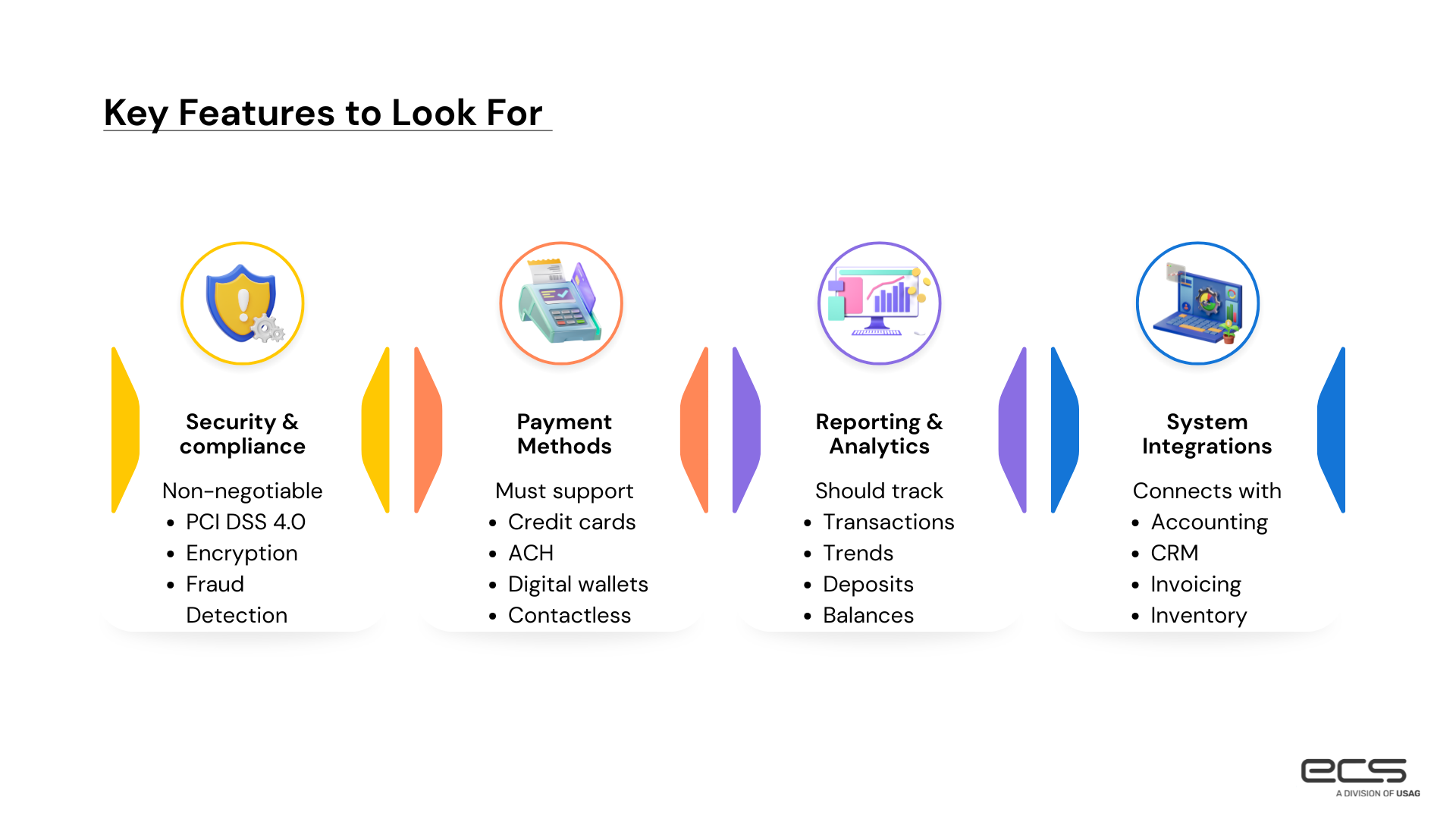
So now that we know what virtual payments are, their benefits, and which options your business has to collect payments digitally, let’s break down the key features to look for in the right virtual payment solution for your specific business.
Security and PCI Compliance
When seeking the right solutions, there are essential features to consider. But security should always be top of mind. Make sure any virtual payment processing solution complies with PCI requirements.
Multiple Payment Options
Like we said before, customers expect flexibility with how they can pay. The more payment preferences you can accommodate, the easier it becomes for customers to complete transactions efficiently. You want to ensure your payment platform supports:
- Credit cards
- ACH payments
- Digital wallets
- Contactless payments
Reporting and Analytics
Good reporting tools save significant administrative time. You and your team should be able to track transactions, payment trends, deposits, and outstanding balances without exporting six spreadsheets and questioning life choices afterward. Insights into your transaction reporting and analytics can provide valuable data on customer behavior.
System Integrations
Lastly, consider how easy it will be to integrate with your existing systems. Payment systems should integrate with your:
- accounting software
- CRMs
- invoicing platforms
- inventory
- other operational tools
Disconnected systems create reconciliation problems that compound over time. But a payment solution seamlessly integrated into your workflow can massively increase your efficiency.
Fragmented Payment Systems
There is also the issue of fragmented systems for different payment methods. Businesses sometimes adopt multiple disconnected tools over time:
- One invoicing system
- One mobile app
- One ACH provider
- One recurring billing platform
With this approach, you can guarantee that nobody will enjoy reconciling transactions…because data lives everywhere. (Not that data reconciliation is particularly enjoyable to begin with…unless you’re a true math nerd). But the more streamlined your systems are, the more “enjoyable” it will be.
How to Choose the Right Virtual Payment Solution
Choosing the right virtual payment solution to accept payment remotely depends heavily on your business model and matching the technology to your needs. Different businesses have unique needs. What works for a small consulting firm might not be right for a retail store.

Ask Practical Operational Questions
When evaluating payment solutions for remote businesses, owners should focus on asking practical questions about their payments:
- How do my customers currently prefer to pay?
- At what stage does payment friction happen right now?
- Which processes consume most of my staff’s time?
- What systems already need integration?
- How important is recurring billing for my business model?
- What level of reporting visibility do I need?
Understand Pricing
Beyond practical transaction questions, platform pricing, of course, deserves careful evaluation. Many payment providers advertise low rates or even “zero fee processing.” But they don’t explain that there really is no such thing as free payment processing. That’s just a way to make you pass along costs to your customers with surcharges. Many processors simultaneously add layered and other hidden fees, platform costs, or operational limitations later.
Ensure You Will Have Appropriate Merchant Support
Quality and easily accessible support matters too. Payment issues don’t wait for convenient times. A responsive support team that understands operational urgency instead of forcing owners through endless ticket systems is one of the greatest benefits a business can get with the right payment platform.
How Virtual Payments Can Improve Cost Efficiency
One of the biggest misconceptions around virtual payments is that businesses should evaluate them only through processing rates. Operational efficiency often matters just as much.
What do we mean by that? Well, there are other benefits that make virtual payments worth it. Opting for virtual payment processing can significantly reduce administrative overhead. With more of a “self-serve” payment structure, you will need fewer staff or lower payroll. hours. You’ll also accelerate payment collection while minimizing manual data entry. Ultimately, you can streamline your operations across all sales channels.
This is where ECS Payments fits in naturally for many businesses.
Companies evaluating payment solutions often want more than transaction processing. They want systems that simplify operations, support multiple payment methods, integrate cleanly into existing workflows, and help reduce friction for both employees and customers.
ECS Payments can implement a flexible payment infrastructure for businesses that supports remote payment processing, recurring billing, mobile transactions, virtual terminals, and secure online payment solutions without creating unnecessary operational complexity.
If it isn’t clear by now, what we’re getting at is payment systems influence far more than just customer checkout. They affect accounting workflows, customer communication, reporting visibility, and day-to-day efficiency.
Final Thoughts
Virtual payments are now part of the operating system of the majority of modern businesses. Customers expect flexible, secure, and convenient ways to pay. Business owners need faster collection, better visibility, and fewer manual tasks. Those two needs are met inside the payment process.
The important thing is building a payment strategy that actually fits how your business operates instead of forcing your workflows around disconnected tools.
Technology changes quickly. Customer expectations change even faster. The businesses that get this right will not have to chase every new payment trend. They will already have a flexible foundation.
And that is the real advantage: fewer payment headaches, faster collections, and a business that feels easier to run.
Isn’t it time to elevate your payment solutions and embrace the future?
Contact ECS Payments to get started.
