What many merchants do not realize is that their payment platform and checkout flow go far beyond completing a transaction; everything hinges on whether that experience feels effortless or frustrating. The payment platform used in the checkout process has become a quiet revenue engine that shapes customer loyalty, operational efficiency, and even new profit channels.
For years, payments were viewed as unavoidable expenses. Necessary, but rarely strategic. Yet the landscape has shifted. Today, the right payment platform and checkout experience can strengthen margins, elevate brand trust, and create entirely new monetization paths for both merchants and software platforms. This is the lens through which ECS Payments guides its clients to rethink how they accept payments and how those payments can support broader growth goals.
The Economics of Payment Enablement
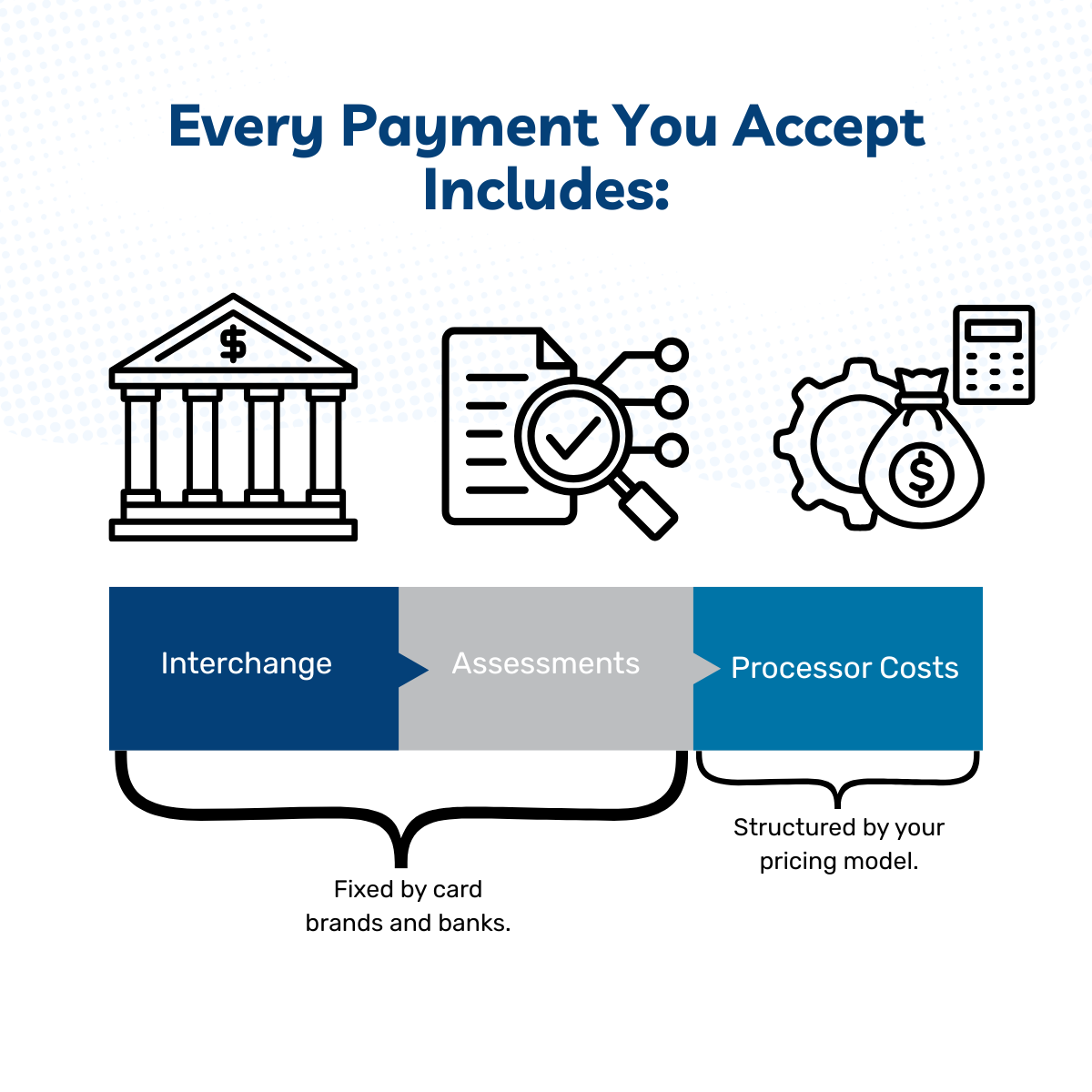
To understand how payments evolve from an additional cost to a strategic lever, business owners would benefit from a clear picture of what sits behind each transaction. Every payment you accept includes interchange, assessments, and processor costs. Interchange and assessments are fixed and set by the card brands and the banks that issue the cards. The processor portion, however, can be structured in different ways depending on the model a merchant or platform selects.
Software platforms, vertical SaaS providers, and multi-location retailers often take part in payment enablement programs that allow them to share in certain processing margins. It is a compliant framework where the platform contributes to merchant acquisition and support and, in return, participates in a portion of the economics.
As transaction volume grows nationwide, this structure becomes increasingly relevant. A report from the Federal Reserve shows that card payments in the United States increased to more than 157 billion transactions in 2021, reflecting the continued expansion of digital commerce across industries.
This steady rise underscores why platforms exploring monetized payment models are taking a forward-looking approach rather than reacting to short-term trends. The shift from utility to profitability begins when payments integrate tightly with the environment where customers already spend their time. That brings us directly into embedded payments.
Embedded and Integrated Payments Models
With more and more businesses becoming digital, the checkout process has to keep up. Embedded payments make that possible. Instead of sending customers to a separate site with an outside portal to complete their order or pay their invoice, the transaction happens right inside the website or platform they are already on. Removing unnecessary extra steps can lead to higher completed sales.
McKinsey’s research shows that embedded finance in the United States has already reached approximately $20 billion in revenue, led largely by payment integration within non-financial platforms.
Because embedded payments anchor the entire customer experience, they also strengthen conversion rates. When customers can pay without being redirected, they are far less likely to drop off. A shorter path to payment almost always translates to better conversion rates. For merchants, this means fewer surprises and more consistent sales performance. For software platforms, it means customers rely more heavily on the product because everything they need lives in one place.
Embedding payments requires the right infrastructure behind the scenes. You must ensure that you are following compliance regulations and managing your payments adequately. This is why choosing the right payment partner matters. A processor like ECS Payments brings the technical backbone and the operational oversight that platforms need so they can focus on building features instead of troubleshooting payments, monitoring fraud, and managing their money movement.
Long term, that stability is what allows a platform to scale without its payment system slowing it down. ECS Payments’ development resources, API integrations, and domestic underwriting make it possible for platforms to embed payments with confidence rather than risk operational gaps.
Value Added Layers Inside the Payment Platform and Checkout Flow
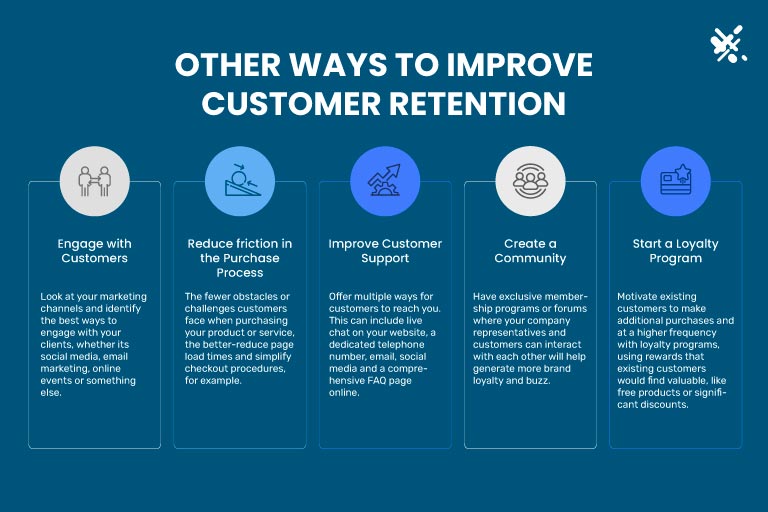
Once payments are built directly into your platform, you can start adding features that make the whole system more valuable. This is usually where merchants begin to see the bigger payoff. Things like loyalty programs, rewards, memberships, and subscriptions all fit more smoothly into the checkout process when everything lives in one place. Customers stick around longer because the perks are easy to earn and even easier to use.
Another major benefit of smarter payment systems is the visibility you gain into how your customers actually behave. When payments and software talk to each other, you have access to the right analytics. You can see which products customers buy most often, how they prefer to pay, and how frequently they return. That kind of clarity makes it much easier to send the right promotions, personalize offers, and plan inventory with confidence.
For businesses that sell both online and in-store, these added layers become even more important. When every channel uses the same payment system, your data is cleaner, and the customer experience feels consistent. Tools like ECS Payments’ omnichannel guide help merchants figure out how to structure these systems in a way that supports growth rather than adding complexity.
Implementation Blueprint for Turning Payments Into a Strategic Advantage
If a business wants to turn payments into a real growth driver, the first step is mapping out every place a customer interacts with a payment request. That could be online checkout, in-app purchases, recurring invoices, or a physical point of sale terminal. Each of these touchpoints offers an opportunity to improve the customer experience.
From there, the business can decide what each touchpoint should accomplish. A subscription service might need automatic renewals and card updater features. An in-person retail business might prioritize contactless payments, loyalty signups, or faster checkout lines. The idea is to match payment tools with the broader goals of the business.
But none of this works without the right payment partner. This is where many businesses either succeed or stall. A strong processor ensures digital payment compliance; it manages risk, supports integrations, and maintains reliability. Without that foundation, even the best-designed payment strategy struggles to move forward. This is where ECS Payments provides distinct advantages.

ECS Payments as a Trusted Source for Payment Innovation
ECS Payments gives businesses the tools and support they need for modernized payments. Whether a business needs API integrations, omnichannel acceptance, ACH capability, or high-volume card processing, ECS Payments offers a flexible setup that can adapt as the business grows.
What sets the company apart is the combination of technical and regulatory understanding, which helps merchants figure out how payments fit into their long-term plans and how to put those plans into action. The approach centers on teamwork, clear communication, and solutions that hold up as the business scales.
As payments become more complex across industries, it helps to work with a processor that understands both the tech and the strategy behind monetizing payments. ECS Payments focuses on turning complicated ideas into straightforward, usable systems. This includes helping merchants build integrated payment flows, advising platforms on how to structure compliant revenue models, and supporting every step of the transaction journey from the first API call to the final settlement.
Merchants consistently point to the value of dedicated account support, domestic underwriting, and solutions that grow alongside their business. Instead of offering a rigid, one-size-fits-all product, ECS Payments works closely with each merchant to design a payment environment that truly supports their goals. This allows businesses to treat payments not as a background task but as a key part of how they operate, make, and maintain more revenue.
The Future of Monetized Payments and Building Trusted Ecosystems
Every time a customer checks out, they are telling you something. What they like, how they shop, and what keeps them coming back. When your checkout works together with your payment platform as one smooth system, it becomes a real driver of growth.
The businesses that pull ahead will be the ones that treat payments as part of their overall strategy. That means choosing partners they can trust, creating a checkout experience that feels seamless, and building tools that strengthen customer loyalty over time.
ECS Payments helps merchants do exactly that. We offer the structure, support, and expertise needed to modernize payments. ECS Payments makes it possible for businesses to turn what used to be a routine process into a long-term advantage. With the right setup, payments become more than a necessity. They become a source of momentum for the whole business.