Loan management software is a platform that allows lenders to manage the entire loan process in one centralized and automated location.
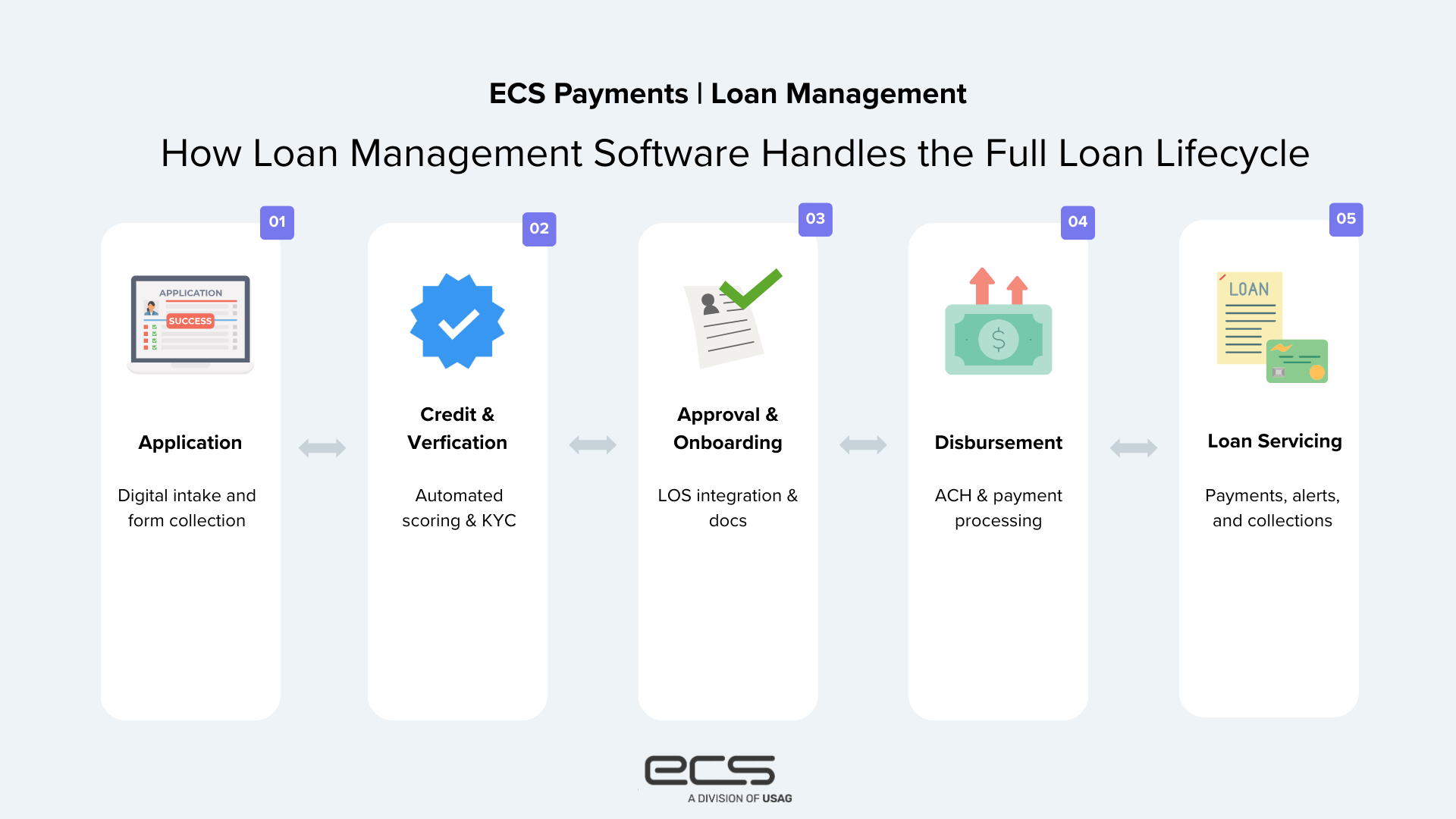
The goal and purpose of loan management software is to streamline the entire process from loan application, onboarding, loan servicing, and other critical aspects of the loan process.
Loan management software also helps to provide a totally digital experience for customers who now prefer to have application and onboarding options that are 100% online and fully digital.
These software platforms are needed for lenders looking to leverage the latest technology to boost revenue and cut costs. However, they are complex to fully understand, and choosing the right platform takes some research.
Below, we’ll outline exactly how loan management software works and which features you should look for to get the most out of these platforms.
Loan Management Software
Loan management software (also called loan management systems) is a platform that allows lenders to fully automate the entire loan process. Some LMS platforms operate in the cloud, while others require on-premise installation.
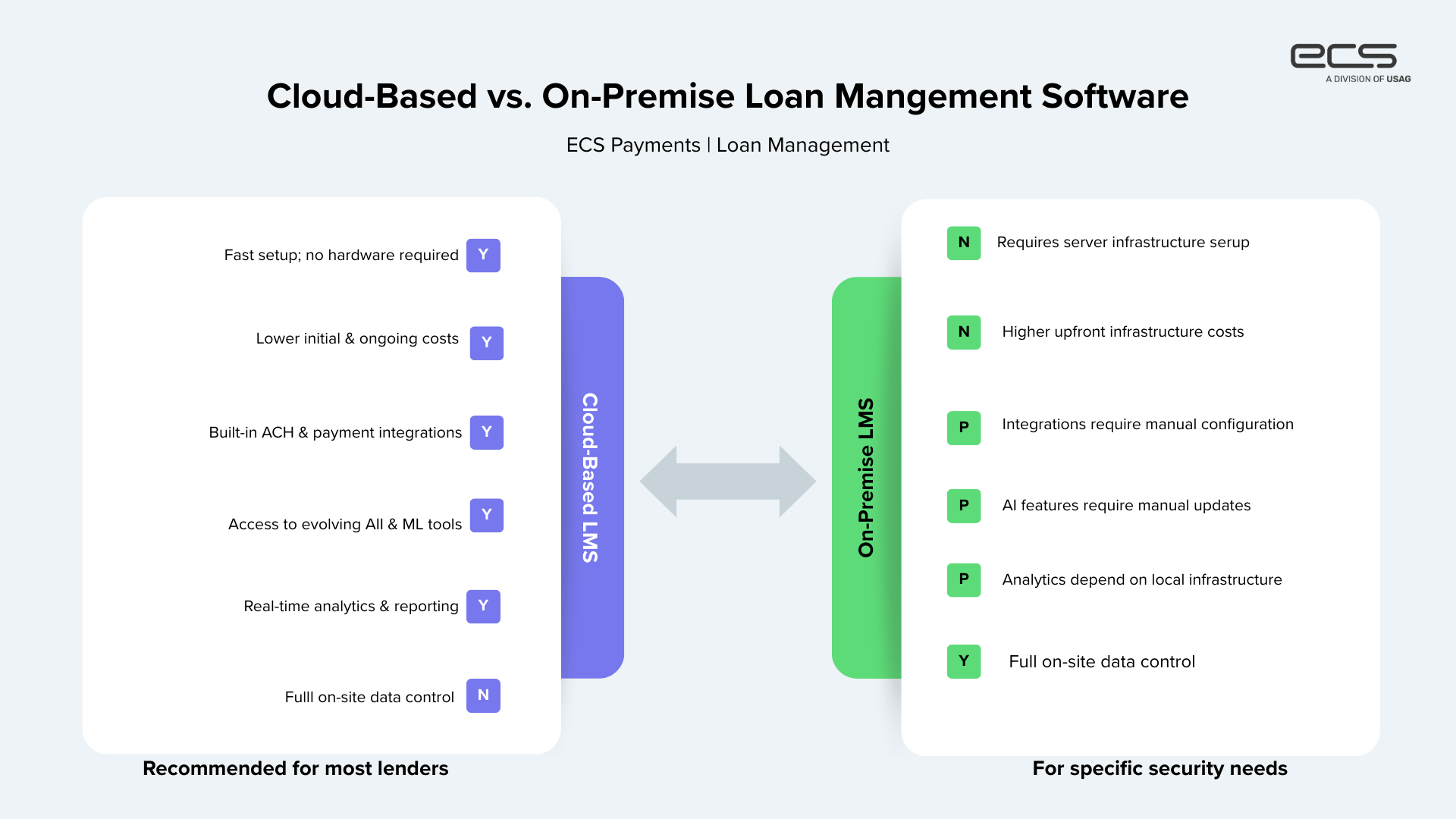
On-premise solutions can provide more flexibility and control over the data and processing of loans. But they also require a dedicated staff to manage and maintain the software and the servers running it.
Newer cloud-based solutions allow for faster and easier setup for lenders looking to take advantage of LMS systems. These cloud-based solutions generally also have a lower initial cost. Lenders without the infrastructure needed to maintain or manage a software platform will often choose a cloud-based solution.
Both types of LMS enable users to automate many processes that loan managers previously handled manually. This includes collecting information, verification, credit analysis, loan tracking, and payment/debt collection.
Difference Between an LMS and a Loan Origination System (LOS)
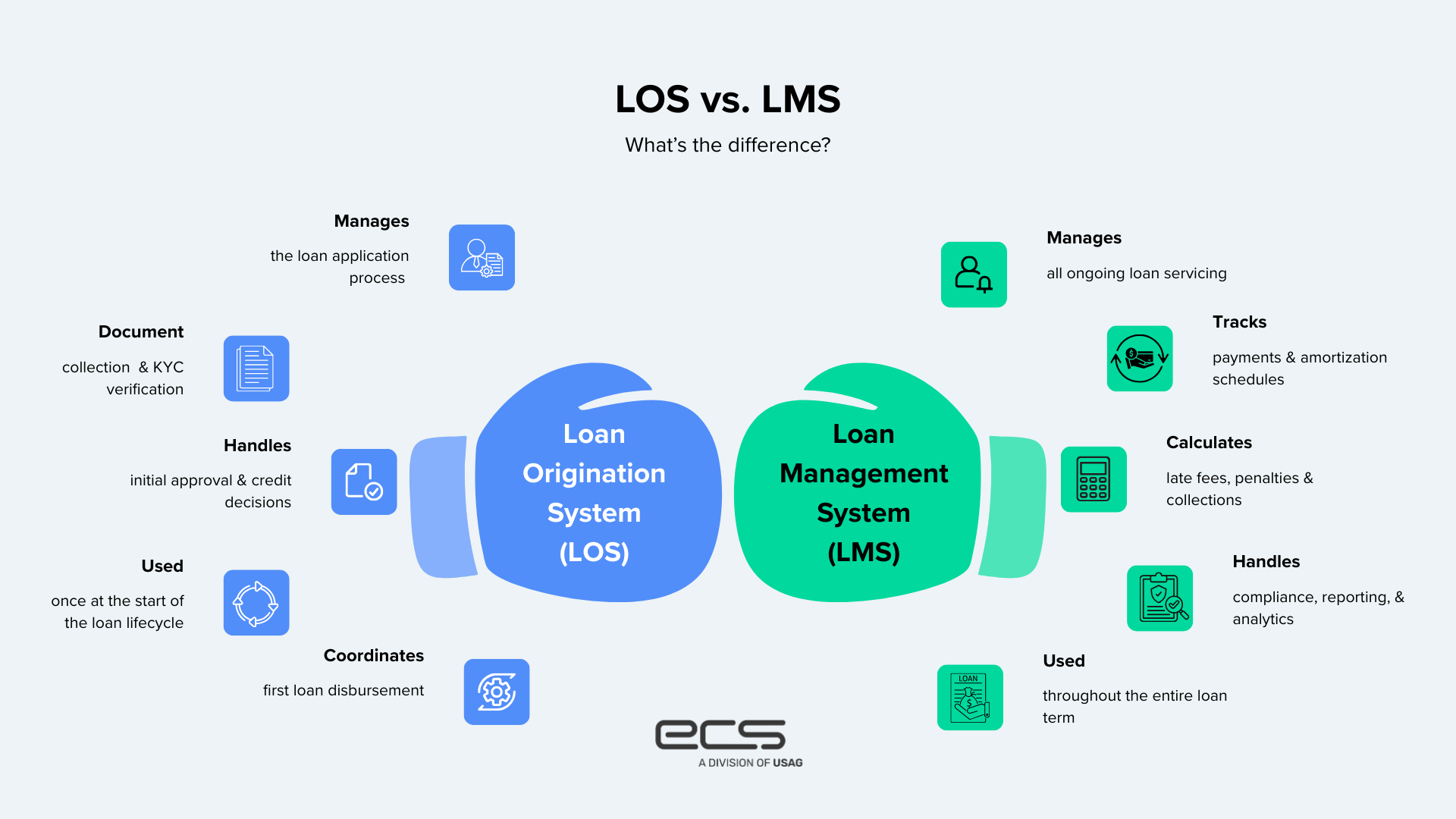
An LOS and an LMS essentially specialize in two different areas of the loan process. The LOS lending system focuses on the loan application process and handles the original approval and initial loan dispersal. From there, an LMS deals with the ongoing management and servicing of the loan for both the lender and the customer.
Today, integrating these systems enhances the experience for both the lender and the customer. Many newer LMS platforms integrate LOS features to tackle the initial loan application and onboarding process after approval or pre-approval.
Having two separate systems can benefit some lenders and their workflows, but this can also be a pain point. Integrating these two systems is the newer approach to streamlining the overall loan process.
Lending Management Software Can Work With The Following Loan Types
Loan management software is incredibly flexible and is designed to work with many different lenders and loan types.
Commercial Loans
Commercial loans are loans made to established businesses or start-ups that require funding. Some LMS platforms specialize in commercial loans and are best for lenders who focus on this area of funding.
However, other more general LMS platforms have modules that allow lenders to add commercial lending functionality to the platform if needed.
Commercial loans generally have more required documentation, which can be an issue when dealing with these loans manually. Errors, omissions, and difficulty with document submission can all slow down the process.
A dedicated solution like an LMS helps to speed up the commercial loan process and reduce errors and document management issues.
Personal Loans
Lenders offering personal loans such as short-term, secured, or unsecured loans can benefit greatly from using an LMS.
Due to the loans’ relative simplicity, an LMS can automate most of the application process and onboarding with minimal intervention. LMS software can also help you deal with situations such as co-signers, which is common with personal lending.
Mortgage Lending
An LMS system can handle mortgage lending or other forms of real estate lending. This type of lending also generally has additional parties involved that can complicate the application process.
An LMS works to streamline this area so different parties and entities can submit the necessary documentation easily and to a centralized platform for storage.
An LMS also has features for dealing with non-payment and the process of retrieving past payments or other assets if the loan defaults after a certain period.
Student Loans
An LMS can streamline private student loan offerings. Most LMS systems will handle private student loans without the need for additional modules. These are very similar to personal loans and will almost always require a co-signer.
With terms of 5-20 years, automating an LMS to service the loan can play a big part in reducing the overall costs for the lender over the life of the loan.
Features To Look For When Choosing An Online Loan Management System
Different LMS platforms will focus on different features depending on their specialized lending area. You’ll want to determine which areas of your lending process need the most automation and choose modules and features that help you address those areas.
Below are some of the most common modules to look for when choosing an LMS.
Customer Onboarding
In the past, loan origination software mostly handled onboarding. However, today, LMS systems integrate these features to create a more comprehensive solution that improves customer satisfaction and reduces lending costs.
You’ll want to look for features that allow you to fully customize this process to fit your exact lending workflow.
One problem lenders face is that potential customers and leads tend to abandon the application process if it becomes confusing or drawn out. This can happen if your onboarding or application interface has requirements that don’t exactly match what the customer is trying to do.
When you can fully customize this process, you will convert more leads and have more qualified customers, completing the onboarding process and successfully completing the entire loan process.
During onboarding, you’ll want features that facilitate automation, such as sending notifications upon receiving applications and sending follow-up emails requesting additional or missing information.
Some LMSs will have this type of automation built-in, while others may use an integration with various CRM solutions to achieve a similar result.
Credit Scoring
Credit scoring can be one of the more time-consuming tasks for lenders. Scoring often involves repetitive processes that, if done manually, really add up to lost revenue over time.
In an LMS, you’ll want to look for features that allow you to automate this process to match your specific lending workflow. This type of automation depends on the type of loans you offer, so you may want a specialized LMS built for your specific industry.
However, many LMS systems allow for a great deal of flexibility in this area through different modules and extensions.
If you use a third-party service for scoring, you will want to ensure your LMS integrates with that service.
AI-based Automation Features
Some new LMS systems incorporate AI and machine learning technology to speed up various lending processes.
These can be for credit scoring and filtering applications based on predetermined criteria or after various checks are performed.
These are new technologies; in some cases, they can significantly speed up lending processes. However, some more complex lending cases may not produce the best results, potentially resulting in the loss of customers who could otherwise be approved through alternative methods.
It’s important to monitor these tools as you use them and examine your analytics regularly to ensure they provide a cost-cutting benefit to your workflow.
Credit Management
With all information stored in the LMS, loan officers can easily disburse the final loan amounts directly from the dashboard with only a few clicks.
This also helps to facilitate a faster transfer of funds to the customer for immediate use. The customer will also receive automated messages when the loan officer approves and sends the loan amount to the account on file.
Cloud-Based Solution
We touched on cloud-based loan servicing software earlier, which are quickly becoming the most popular options with lenders of all sizes.
However, they may not be appropriate for lenders with specific security or other requirements. Still, a vast majority of lenders should strongly consider a cloud-based solution.
Some of the benefits of a cloud-based LMS are:
Lower Costs: Cloud solutions will have lower initial and ongoing costs. This can help maximize revenue per loan. You can save additional costs by customizing cloud-based solutions and only paying for the needed features. This means you don’t pay for extra services your specific type of lending doesn’t require.
Better Risk Assessment: Cloud solutions allow for more automated checks throughout the loan management process to aid in risk assessment. They can also help to optimize interest rates for each application.
Easier Integrations: As a lender, you will need to integrate various other services into your LMS to get the most benefit from it. Cloud-based LMS solutions will generally have common integrations already built in. These include integration for bank verification, ACH payments, payment services, credit scoring, and other tools.
Access To Evolving AI Tools: A cloud-based LMS can offer new AI tools as they become available. These AI tools are becoming increasingly common during the lending process and can speed up repetitive and basic processes.
Faster Onboarding: Cloud solutions allow you to quickly integrate the loan origination process into your existing website or create a white-label website and app for easy onboarding under your brand. This faster onboarding also improves the overall customer experience.
Upselling & Bundling: Most cloud-based solutions allow you to upsell and bundle various loan products. Customers can access a variety of products you offer with just one application. Features like this can help you maximize revenue and offer the newest credit products your customers are searching for.
Ongoing Loan Servicing
Within an LMS, loan servicing tools and features can help you keep track of payments, overall loan status, and amortization schedules. These tools will also automatically calculate late fees, penalties, and other changes as the loan progresses. The software enables users to perform all these functions without requiring input from a loan officer.
Security & Compliance
Trusted loan management software, especially in the cloud, has built-in enterprise-grade security to help you stay compliant with security and data-handling regulations. This can reduce your costs and obligations compared to local storage of data.
Compliance with lending regulations is another area to consider when choosing an LMS solution. Choosing a solution with easily configurable workflows helps you maintain compliance with the following regulations.
Risk-Based Pricing Rule
Enforced by the FTC, lenders must notify borrowers if they are receiving a worse rate based on their score. Automated messaging within an LMS can help you comply with these regulations.
Fair Credit Reporting Act
The regulations of the “Fair Credit Reporting Act” encompass the consumer’s ability to receive and be notified of free credit reports. They also govern how lenders and other reporting agencies can use the collected customer data. Using the automated tools and communications built into the LMS helps lender remain compliant with the FCRA.
Equal Credit Opportunity Act
The Equal Credit Opportunity Act prohibits discrimination when lending. It includes lending an extension of credit for any purpose. This includes personal, commercial, and credit extended to corporations or trusts.
Truth In Lending Act
The Truth In Lending Act requires financial service providers and lenders to provide a loan’s total and accurate cost when extending credit. The LMS can easily calculate and display all this information for the consumer when they apply for credit. Different channels, such as emails, text, or other chosen communication methods, can communicate these updates to the consumer as the loan terms change.
Servicemembers Civil Relief Act
The Servicemembers Civil Relief Act protects service members from certain loan obligations while serving. An LMS will help you keep track of loans that fall under this regulation and update loans if customers enter active service.
Keeping Up With Future Regulations
You can easily comply with new regulations for financial institutions or adapt to changes in current regulations by using an LMS. The LMS allows you to integrate new reporting requirements or additional documentation into your existing digital workflows.
Analytics & Reporting
A centralized digital hub for all your loans and customers enables real-time viewing of reporting and analytics, ensuring that data is consistently up to date. Compiling records from different systems is unnecessary when using a LMS.
This allows a lender to quickly research which loans are the most profitable and the current state of their entire loan book.
Alerts or triggers can also link analytics to notify specific loan officers of particular changes to loans under their authority.
Integrations For Loan Servicing Systems
Integrations extend the functionality and provide seamless support for the business tools you already use as a lender.
A few areas to consider are payment integrations. You want to provide your customers with every option to pay, so integrations with common payment gateways are critical. This will allow you to accept various forms of digital payments as well as ACH payments.
You’ll also want integrations with various payment services that your customers may use, such as PayPal.
Next up are bank verification integrations. During the loan application process, your customers will need to confirm their bank accounts with you. An LMS will allow you to integrate these services with your account so the customer never has to leave your platform.
When using instant bank verification (IBV), ensure the LMS you are considering has integrations for your service. If not, the customer may experience friction during the onboarding and abandon the application.
Other integrations to be aware of to ensure compatibility with your LMS are accounting software integrations and business intelligence (BI) services.
Debt Collection
When loans go unpaid, the LMS will allow tools so the loan officer can take action to try to recover funds or change the terms of the loan if necessary. The loan officer can change payment plans or other features from within the LMS and have that information or offer communicated automatically to the customer.
Depending on the type of lending your business does, this may be a critical feature depending on your industry’s default or non-payment rate.

Overview Of Loan Management Software
Leveraging an LMS has become necessary to be competitive in today’s lending market.
Lenders need to find every advantage they can when minimizing risk and increasing their profitably for every loan.
But beyond the cost savings through automated processes, an LMS also greatly improves the customer experience. Today’s customers want a fully digital experience when seeking financial services.
Most customers and borrowers prioritize a digital experience that allows them to shop and apply for loans anytime and anywhere.
An LMS allows lenders to achieve both of these core objectives in the most cost-effective way possible.
—–
ECS Payments is a leader in providing the latest payment solutions for businesses that want to leverage the latest technology to drive sales and growth. Contact ECS Payments to learn more about the latest payment technology to help your business grow.
Frequently Asked Questions About Loan Management Software
How can loan management software benefit my business?
Loan management software offers benefits to merchants by streamlining the entire loan process, from the application to servicing. It automates previously manual efforts such as information collection, credit analysis, and payment collection.
What types of loans can be managed with loan management software?
Pretty much any loan you type you work with can benefit from loan management software’s versatility, including commercial, personal, mortgage, and student loans. The right loan management software has the flexibility to allow lenders to customize processes specific to each loan type.
Why choose a cloud-based loan management system over an on-premise solution?
Cloud-based solutions offer faster installation, lower setup and ongoing costs, and easier integration with processing services like those offered by ECS Payments. They provide benefits such as better risk assessment, access to evolving AI tools, and enhanced customer experience with faster onboarding and improved flexibility.
How does loan management software ensure security and compliance?
Trusted loan management software incorporates enterprise-grade security to stay compliant with regulations, including the Risk-Based Pricing Rule, Fair Credit Reporting Act, Equal Credit Opportunity Act, Truth In Lending Act, and Servicemembers Civil Relief Act.
