For SaaS companies and ISVs, payments are an integral part of the software experience. When a merchant books a client, processes an order, or manages recurring billing, they expect the transaction to happen inside the platform, not through a redirected page or third-party service.
That seamless experience is powered by embedded payments. It’s what has allowed platforms like Shopify, Toast, and MindBody to transform from software providers into complete ecosystems.
But here’s the key difference: while most ISVs understand the importance of embedding payments, many underestimate what it takes to do it right.
That’s where ECS Payments comes in. ECS is not a PayFac or a reseller. ECS is a direct payment processor with established relationships with the banks and card networks. This allows ECS to offer ISVs true embedded payments through individual merchant accounts, complete compliance support, and flexible white-label or co-branded programs.
What Are Embedded Payments?
Embedded payments integrate payment functionality directly into a software platform, allowing users to accept payments within the application without being redirected elsewhere.
When done well, embedded payments feel natural. A merchant uses your platform to manage their business, and payments simply “happen” as part of the workflow.
Real-World Examples
- Shopify lets merchants run their stores and accept payments from one dashboard.
- Toast allows restaurants to process transactions and manage operations in one environment.
- MindBody enables businesses to schedule, bill, and take payments all within the same platform.
These companies did not add payments as an afterthought. They built it into their DNA. That same approach is now becoming standard across software categories, from appointment apps to invoicing systems to B2B SaaS platforms.
Embedded Payments vs. Gateways vs. PayFacs
To understand how ECS Payments fits in, it helps to distinguish these models:
- A payment gateway authorizes and routes transactions between a merchant and a processor.
- A PayFac aggregates many sub-merchants under one master account, where each sub-merchant operates beneath the PayFac’s umbrella.
- A payment processor, like ECS Payments, connects merchants directly to the payment process through a secure payment gateway. Each merchant receives their own merchant ID and account, which provides greater stability, lower risk, and clearer underwriting.
When ISVs embed ECS’s processing infrastructure, they maintain full control over their user experience while giving each merchant their own account for secure, compliant, and scalable transaction processing.
Why ISVs Are Embracing Embedded Payments
Independent Software Vendors are turning to embedded payments not just to improve user experience but to strengthen revenue, retention, and long-term platform value.
New Revenue Potential
Integrating payments directly into your software opens new, ongoing revenue channels that go beyond subscription income. With ECS Payments, ISVs can earn a share of the processing revenue from every transaction that runs through their platform, without taking on compliance, credit, or regulatory risk.
According to McKinsey, platforms that control the customer relationship can capture as much as 30% of total embedded finance revenue pools. ECS helps software providers tap into that same opportunity through tailored revenue-sharing programs, allowing you to monetize payments while keeping your team focused on building and scaling your product.
Stronger User Experience and Brand Control
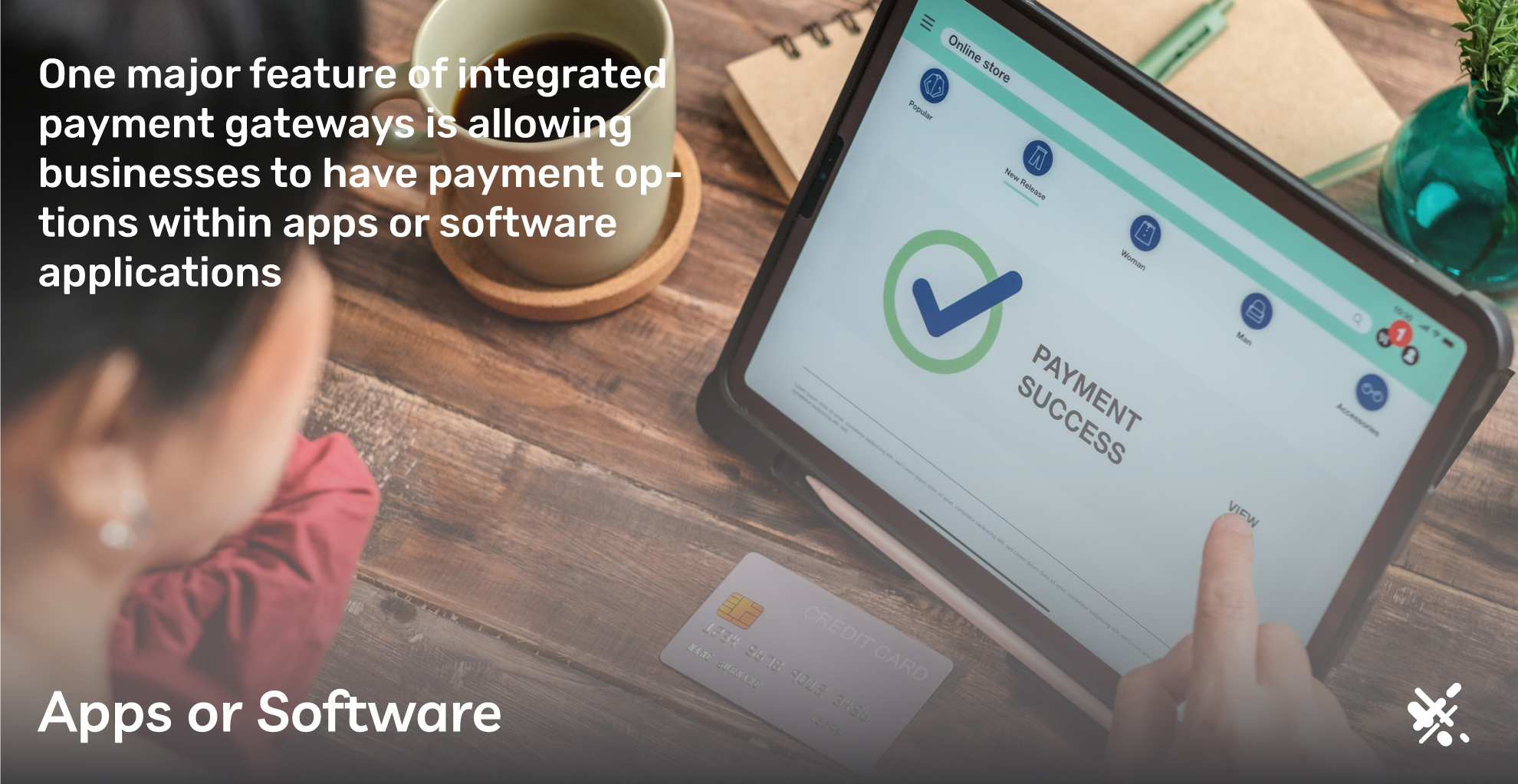
Embedded payments reduce friction by keeping every part of the transaction within your application. When merchants never have to leave your platform, they perceive the experience as more professional, more efficient, and more trustworthy.
By integrating ECS’s processing technology, ISVs retain complete control of the checkout design, communication style, and transaction flow. The result is a consistent, branded experience that drives higher engagement and loyalty.
Data Ownership and Customer Retention
Having control over the payment experience merchants use through your software means owning all the data that comes with it. Such insight can help you make informed decisions about feature development, pricing, and customer support.
As EY notes, embedded payments are strategic assets that allow nonfinancial platforms to enhance user experiences, generate revenue, and move towards a future of digital financial autonomy.
How Integration Works
Embedding payments demands a solid technical foundation, advanced security measures, and, of course, a reliable settlement process for merchants. ECS provides these tools through a proven processor-level infrastructure built to support ISVs at scale.
ECS Payments offers modern RESTful APIs and SDKs that allow developers to integrate payment processing directly into their software platforms. Through these tools, ISVs can:
- Authorize and capture transactions in real time
- Tokenize card and bank data for secure storage
- Process partial or full refunds
- Manage recurring and subscription billing
- Reconcile settlements and generate detailed reports
Because ECS operates as the processor, the connection is direct. There are fewer intermediaries, which means faster settlement, stronger reliability, and greater visibility into transaction performance.
Compliance and PCI Considerations
Handling payments introduces regulatory requirements such as PCI DSS, KYC, and AML compliance. ECS Payments helps ISVs reduce their compliance scope by taking on these responsibilities at the processor level.
For a full breakdown of current PCI DSS requirements, see ECS’s guide to PCI DSS 4.0 compliance.
Challenges and Risks to Watch For
Embedded payments obviously create major advantages. However, they also bring technical and operational challenges that ISVs must anticipate.
Underestimating Regulatory Complexity
Payments require continuous compliance with card network rules, banking regulations, and anti-fraud mandates. Many SaaS platforms underestimate this complexity until it becomes a roadblock.
ECS Payments manages these challenges for you. Because ECS is a direct processor, your merchants get the benefits of compliant, bank-approved accounts, while your platform stays focused on innovation.
Settlement Delays and Chargeback Exposure
Even small delays in settlement can affect merchant trust. Chargeback disputes and fraudulent activity can also damage a platform’s reputation if not handled properly.
ECS Payments monitors and manages these risks directly. Our advanced processing infrastructure ensures reliable funding schedules, detailed chargeback reporting, and easy-to-reach merchant support.
Technical Maintenance
Payment ecosystems constantly evolve alongside card network update requirements and new payment technology. ECS takes on that ongoing maintenance, keeping your platform up to date with minimal developer intervention.
ECS Payments as an Embedded Partner
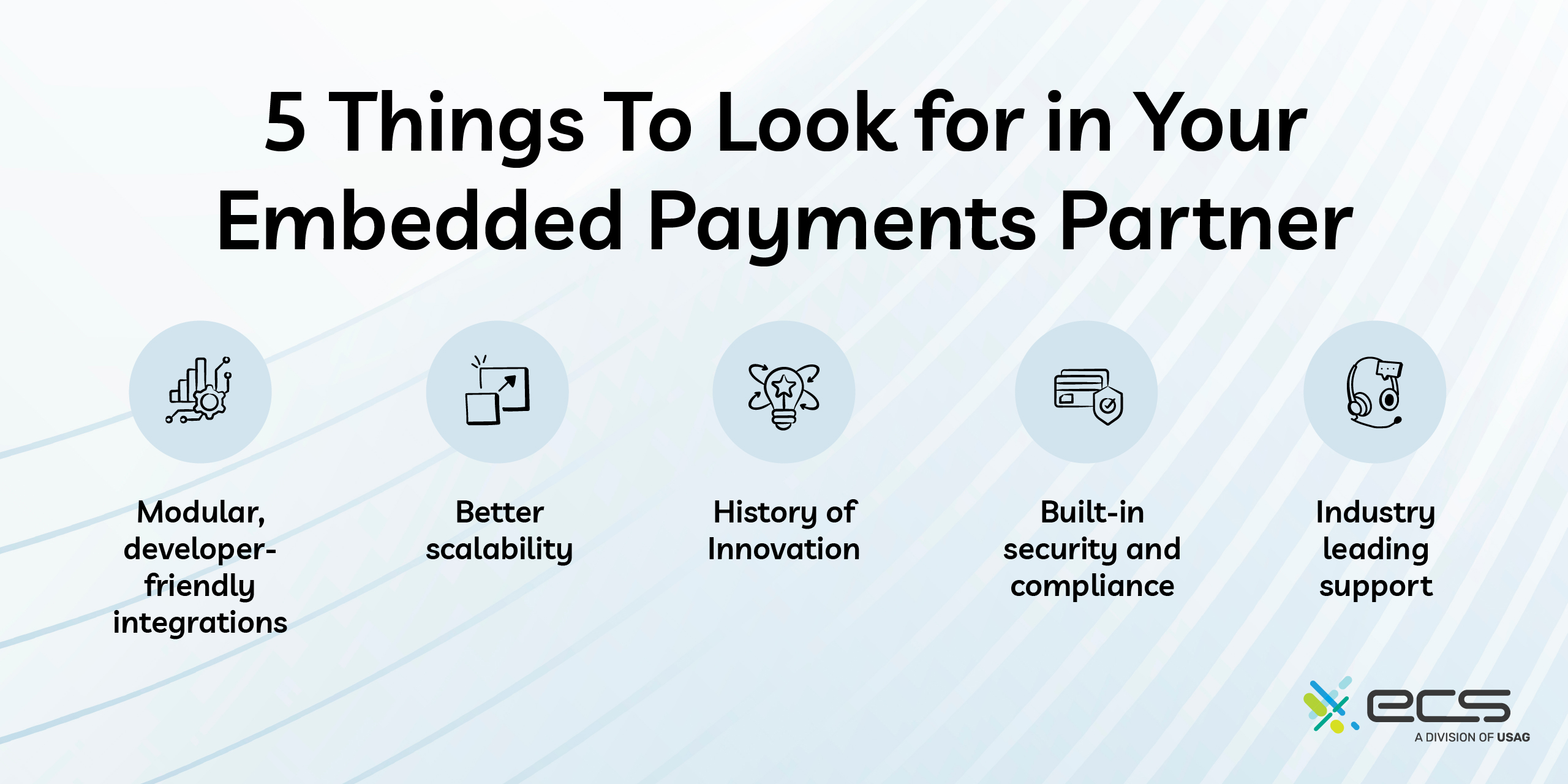
ECS Payments partners with software companies that want to embed payments into their platforms without becoming payment processors themselves.
A Direct Processor, Not a PayFac
As a registered payment processor, ECS has direct relationships with banks and card networks. Every merchant that signs up through your software receives their own merchant account and unique merchant ID, giving them stability and transparency that aggregated PayFac models often lack.
This approach reduces risk, improves underwriting accuracy, and ensures that your merchants always know where their funds are held and when they will be deposited.
White-Label and Co-Branded Options
ECS offers flexible deployment models to match your brand strategy, such as
- White-Label Integration: Payments are fully branded under your software. ECS operates invisibly in the background, powering your transactions with bank-level reliability.
- Co-Branded Integration: ECS appears alongside your brand to enhance credibility and transparency for your merchants.
Both models use the same powerful processor infrastructure and come with full onboarding, settlement management, and compliance support.
Why Partnering with ECS Beats Using Aggregated Payment Solutions
Many ISVs consider PayFac-as-a-Service providers when embedding payments, but these aggregated models often limit flexibility and transparency.
With ECS, you get:
- Individual merchant accounts for every merchant
- Faster settlement cycles with direct acquiring relationships
- Stronger compliance oversight at the processor level
- More control over brand presentation
- Revenue-sharing options based on transaction volume
ECS also provides ongoing technical support and API updates, allowing your software to evolve as payment technology advances.
This combination of stability, control, and partnership is what differentiates ECS from typical aggregator models.
Conclusion: Partner with ECS to Power Embedded Payments the Right Way
Embedded payments are now essential for SaaS growth. The question for ISVs and developers is not whether to embed payments, but who to trust to power them.
Partnering with ECS Payments gives you access to the reliability of a direct processor with the flexibility of a technology-first partner. Your merchants receive their own accounts and IDs through ECS’s banking relationships. You maintain control of the interface, user experience, and brand. Your platform can deliver seamless payments, improved retention, and new revenue streams, without ever taking on the complexity of becoming a payment facilitator.
If you are ready to enhance your software with a secure, scalable embedded payments infrastructure, connect with ECS Payments. We help SaaS platforms and ISVs process payments intelligently, compliantly, and profitably.
