
More service providers, SaaS companies, agencies, or consulting firms are turning to recurring billing with B2B subscription services instead of traditional invoicing. Recurring billing provides visibility into your cash flow and makes forecasting easier, but it also demands secure, automated, and compliant payment systems.
Recurring revenue and B2B payments demand smart payment automation, reliable infrastructure, and subscription management tools that help businesses scale confidently. This article explores smarter payment strategies for B2B subscription services so you can strengthen predictability, reduce churn, and maintain full PCI compliance without sacrificing operational efficiency.
Predictable Revenue Through Recurring Billing
One of the biggest reasons B2B companies shift to a subscription model is the promise of consistent, recurring income. According to Grand View Research, the global subscription economy was worth around $492 billion in 2024 and is projected to exceed USD 1.5 trillion by 2033. Even more compelling, the B2B segment represented the majority share of that total, accounting for over 55 percent.
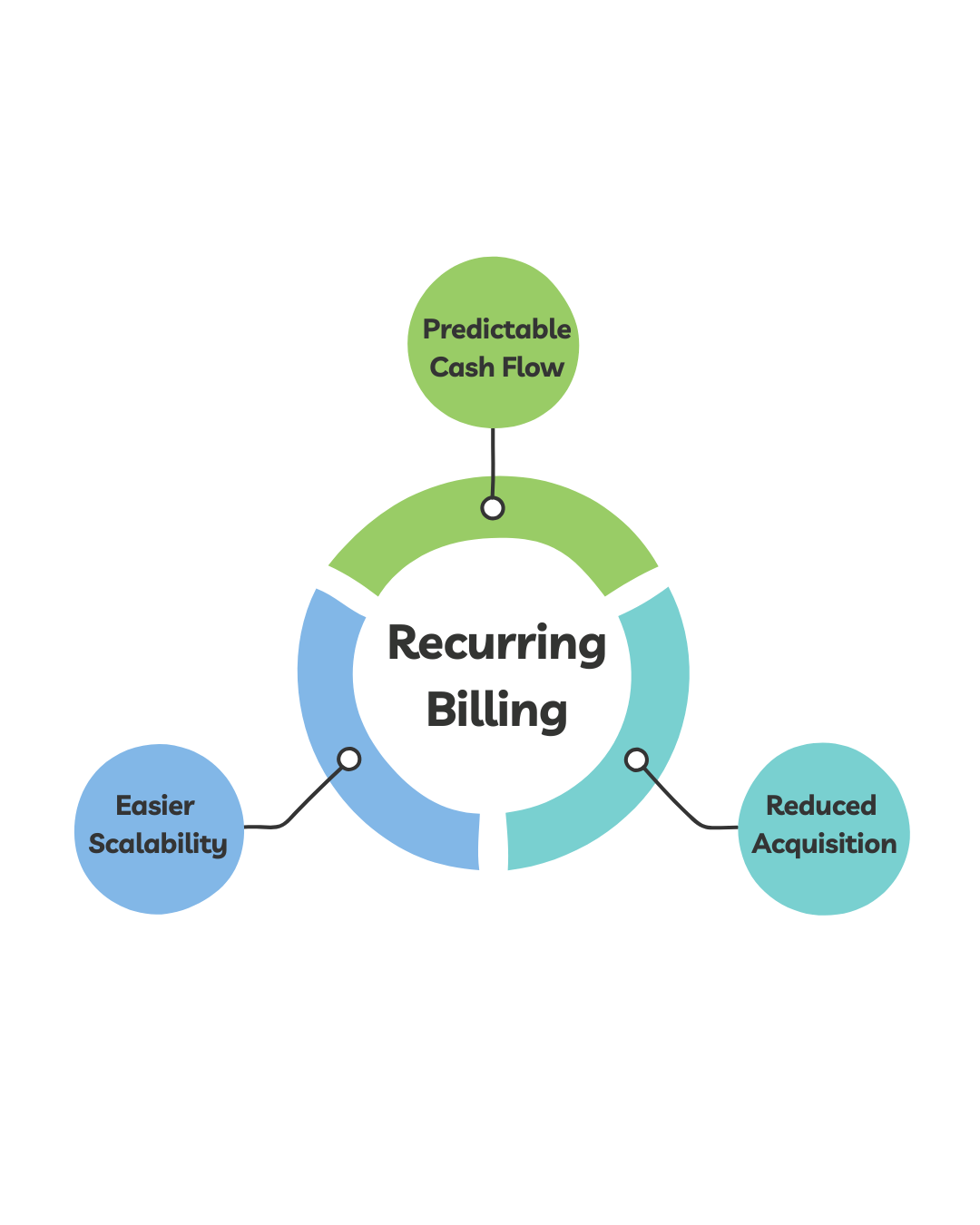
Recurring billing provides three powerful advantages:
- Predictable cash flow that allows for accurate forecasting and growth planning.
- Reduced acquisition pressure since retention becomes a major growth driver. A recent report found that companies prioritizing retention and churn reduction see higher profit margins.
- Easier scalability through upsells, add-ons, and premium tiers, all managed through smart subscription management tools.
For any business running B2B subscription services, payment integration and automation are not optional. If your payment processor cannot handle renewals, retries, or customer notifications automatically, you’ll lose both revenue and trust. ECS Payments helps businesses implement recurring payment systems designed to keep cash flow steady and clients satisfied.
Payment Model Options
Building the most adept B2B subscription service for a successful business is more than setting your price for your service. You must choose the payment model that fits your business model and client needs. Different pricing models include: fixed subscriptions, usage-based subscriptions, and a hybrid model.
Fixed Subscription
A fixed subscription model is the simplest payment structure to generate recurring revenue. It charges a consistent fee on a regular schedule, whether monthly, quarterly, or annually. The consistency makes it easier for you and your clients, both of whom know exactly what to expect. Because of its predictability, it is one of the most popular structures for B2B subscription services.
Fixed subscriptions work well for businesses that deliver continuous value, regardless of the client’s usage. For example, a marketing agency might charge a monthly retainer for ongoing ad management and reporting, or a consulting firm may provide regular strategy sessions. A software company could also benefit from a fixed-tier plan if it offers a tier with unlimited access to advanced features.
The main appeal of a fixed subscription is its consistency. You can plan cash flow and revenue with more accuracy and reduce the additional administrative burdens of chasing invoices. For your clients, it simplifies budgeting and removes the uncertainty of variable billing. They know what their cost will be every month, which strengthens trust and makes renewals much easier.
However, fixed subscriptions still require payment automation and reliable subscription management tools. A fixed subscription gives clients ongoing value with zero interruptions, and your business enjoys predictable, stable income without the operational drag of manual billing.

Usage-Based Subscription
On the other hand, usage-based payment models link your pricing directly to how much your clients actually use your service or product. Costs rise or fall based on measurable activity. This structure feels fair to clients because they only pay for what they use, and it naturally encourages them to grow with you over time.
This approach is ideal for businesses that rely on measurable digital interactions. Think of companies offering API communication tools like text messaging or voice delivery, platforms that provide AI video generation or image rendering, or systems that bill by data processing volume or storage usage. In these cases, usage-based pricing aligns perfectly with customer value because the more your client uses your platform, the more value they receive, and the more revenue your business earns.
To make this model work smoothly, you need precise payment automation with strong billing accuracy. Manual tracking or inconsistent billing can create confusion and disputes. You need a platform that monitors usage precisely, generates accurate invoices, and processes on-time payments automatically to keep everything transparent and predictable for both you and your clients.
Hybrid Model
A hybrid model gives you and your clients the most flexibility. You can offer either pricing model to suit the type of subscription and the use your client needs, and the service you provide. Compliance and transparency.
Regardless of the model, regulatory transparency is crucial. Businesses must disclose renewal terms, pricing, and cancellation policies clearly. The U.S. Chamber of Commerce explains that PCI compliance applies to all businesses that store, transmit, or process cardholder data. Working with a compliant processor like ECS Payments ensures your billing structure stays both transparent and protected.
MoneyEU’s compliance guide reinforces the need for clear billing disclosures and documented consent. These are all key safeguards for long-term trust.
Reducing Involuntary Churn
Every subscription business faces one major threat: involuntary churn. Even the most satisfied clients can unintentionally cancel their service. Automatic payments may fail due to expired cards, declined ACH transfers due to insufficient funds, or outdated billing information. However, there are ways to deter unnecessary payment declines. Modern systems use:
- Retry logic to automatically reattempt failed payments.
- Customer notifications to prompt clients to update payment details before service interruption.
- Payment integration with CRMs to automate outreach and account management.
Integrating Payments With CRMs and Accounting Systems
Operational efficiency is where payment integration becomes a real differentiator. Disconnected billing systems create unnecessary manual work, reconciliation errors, and generally wasted time. Integrating your payment processor with accounting systems automates reconciliation, reduces manual data entry, and ensures every transaction is accurately recorded. Successful B2B payments rely on seamless coordination to manage deferred revenue and recurring renewals.
Risk Management in Recurring Billing
The Power of APIs
Modern APIs let your payment system talk directly to your CRM, which makes subscription management much easier. When your payments, CRM, and accounting platforms all stay connected, every transaction flows smoothly through your business. You can see what’s been billed, what’s pending, and what’s renewing, without having to dig through spreadsheets or fix data by hand. That kind of visibility saves time, cuts down on errors, and gives you a clear picture of your recurring revenue at any moment.
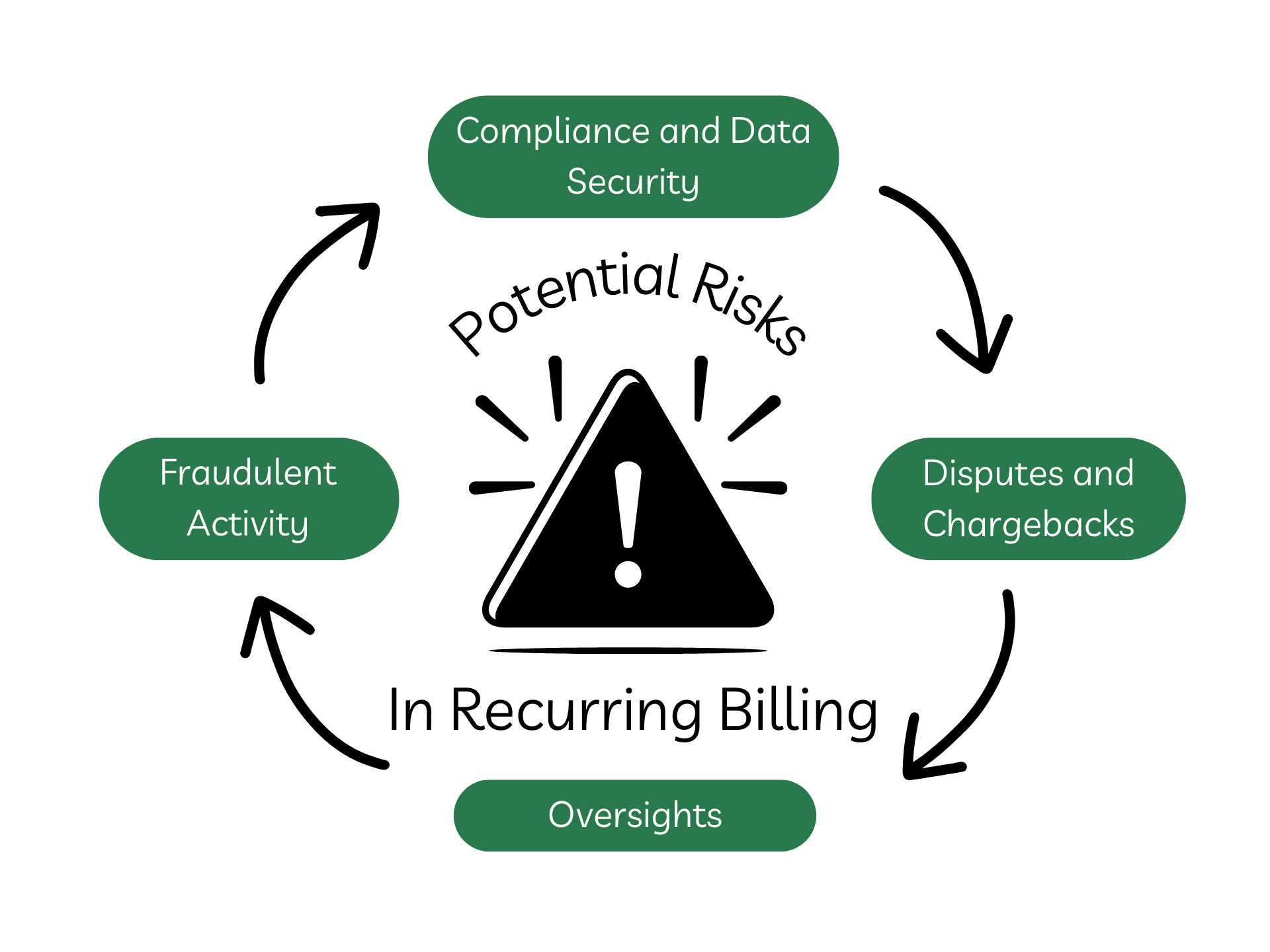
Recurring billing creates an amazing opportunity, but it also carries a lot of responsibility. Maintaining compliance, protecting customer data, and preventing disputes are non-negotiable aspects of operating B2B subscription services.
PCI Compliance and Data Security
Every business that processes transactions, whether they are independent or recurring, must meet PCI compliance standards. This means secure transmission, tokenization, and encryption of payment data. The U.S. Chamber of Commerce outlines how even outsourced processors require businesses to maintain proper validation. ECS Payments manages this through PCI-certified infrastructure, ensuring your customer data remains secure without increasing your administrative load.
Dispute and Chargeback Prevention
Oftentimes, recurring billing can result in disputes. Cardholders (or business account holders in this case) may either forget what this recurring charge is for, not recognize the transaction descriptor on their statement, or need to cancel the servicer, but don’t know how, or you’ve made it difficult to do so.
Clear language on your recurring authorization forms and recognizable billing descriptors reduces confusion. New laws also require one-click cancel options for subscription services. MoneyEU notes that transparency is the single best defense against chargebacks.
Continuous Risk Monitoring
Fraudulent activity and billing disputes can erode profit quickly. ECS Payments provides ongoing fraud screening, velocity checks, and reporting tools to keep your B2B payments environment secure. Effective subscription management requires vigilance as much as automation.
ECS Payments: A Trusted Partner for Subscription Businesses
A successful subscription business depends on more than recurring invoices. It depends on the systems powering those invoices. ECS Payments provides the infrastructure and expertise to make that happen.
- Payment automation that ensures renewals run smoothly and errors are minimized.
- Payment integration with CRM and accounting systems to create a unified financial ecosystem.
- Built-in PCI compliance and tokenization for complete security.
- Churn reduction tools that recover revenue automatically.
- Expert support that understands the operational challenges of B2B subscription services.
ECS Payments processes your payments and supports your business model from every angle.
Building Sustainable, Compliant Recurring Revenue
The rise of B2B subscription services marks a permanent transformation in how companies buy, sell, and deliver value. Predictable income, retention-driven growth, and operational efficiency are only possible when backed by secure payment automation and intelligent subscription management.
Every failed transaction or manual process represents a lost opportunity. Businesses that invest in integrated, compliant B2B payment systems will enjoy steadier growth and fewer disruptions.
With ECS Payments, you gain a long-term recurring payments partner to optimize for businesses and keep you compliant. By combining smart technology with real expertise, ECS Payments helps you transform predictable payments into predictable success.
