If cash flow in your business feels like a job site running behind schedule, you are not alone. In construction, if your business is not set up to be efficient, you can finish the work on time and still get paid as if the project hit a delay. That is where construction payment solutions start to matter more than most expect. Delayed payments, fragmented systems, and slow contractor payment processing are not edge cases. They are part of the day-to-day reality for many firms.
After sending an invoice, you wait. But, guess what? In the meantime, your payroll is not waiting, suppliers aren’t waiting, and equipment costs aren’t waiting either. In construction, you have to fund your work up front, but revenue comes at its own pace. The gap between your business’s work and its payment can create pressure everywhere else.
Most of it comes down to how payments are handled behind the scenes. And that is something you can actually control.
The Payment Bottleneck in Construction
If you strip it down, the biggest issue is how companies handle their billing and what happens behind each process. Even with all the digital automated options available, manual invoicing is still common in this industry. But much to the company’s demise. Someone creates the invoice, emails it, follows up, and then hopes it lands in the right hands. From there, it moves through approvals, internal reviews, and eventually payment processing.
Checks are still everywhere. Which means envelopes, mail delays, and bank processing windows. It is a system that moves at its own pace, regardless of how quickly your project is running. It takes more than 3 months on average for construction businesses to collect payment on invoices.

Then there is visibility. Or the lack of it. You might have multiple job site payments in motion, but tracking where each one stands is rarely straightforward. Some are approved. Some are pending. Some are sitting untouched. That uncertainty forces you to make financial decisions without a full picture.
Modern Payment Solutions for Construction Firms
Modern construction payment solutions start by removing friction from invoice sending and payment. Digital invoicing changes the tempo. Instead of waiting days or weeks to send a bill, and then days or weeks… or months to receive the payment for that bill, you can issue invoices immediately upon completion of work or the achievement of a milestone within a larger project.
eCommerce payment capabilities take it a step further. Your clients can pay directly through secure links, without switching systems or writing checks. That alone speeds up contractor payment processing.
ACH for construction has its space for larger transactions. Funds move directly between bank accounts. According to Nacha, the ACH network processed more than 35 billion transactions in 2025. From 2024 to 2025, payment volume rose nearly 4.9%. Same-day ACH volume alone grew 16.7%, with the value of those payments increasing by 21.4%. These transactions keep processing costs lower than those for card payments. On high-value invoices, that difference matters. You’re looking at cents, not a percentage that eats up more and more of profits with larger jobs.
Card payments aren’t going anywhere. They’re still the go-to for smaller wins, urgent requests, and just giving clients the flexibility they want. Offering card payments in-person or online removes the speed bumps between your invoice and your bank account.
Streamlining Operations with Integrations
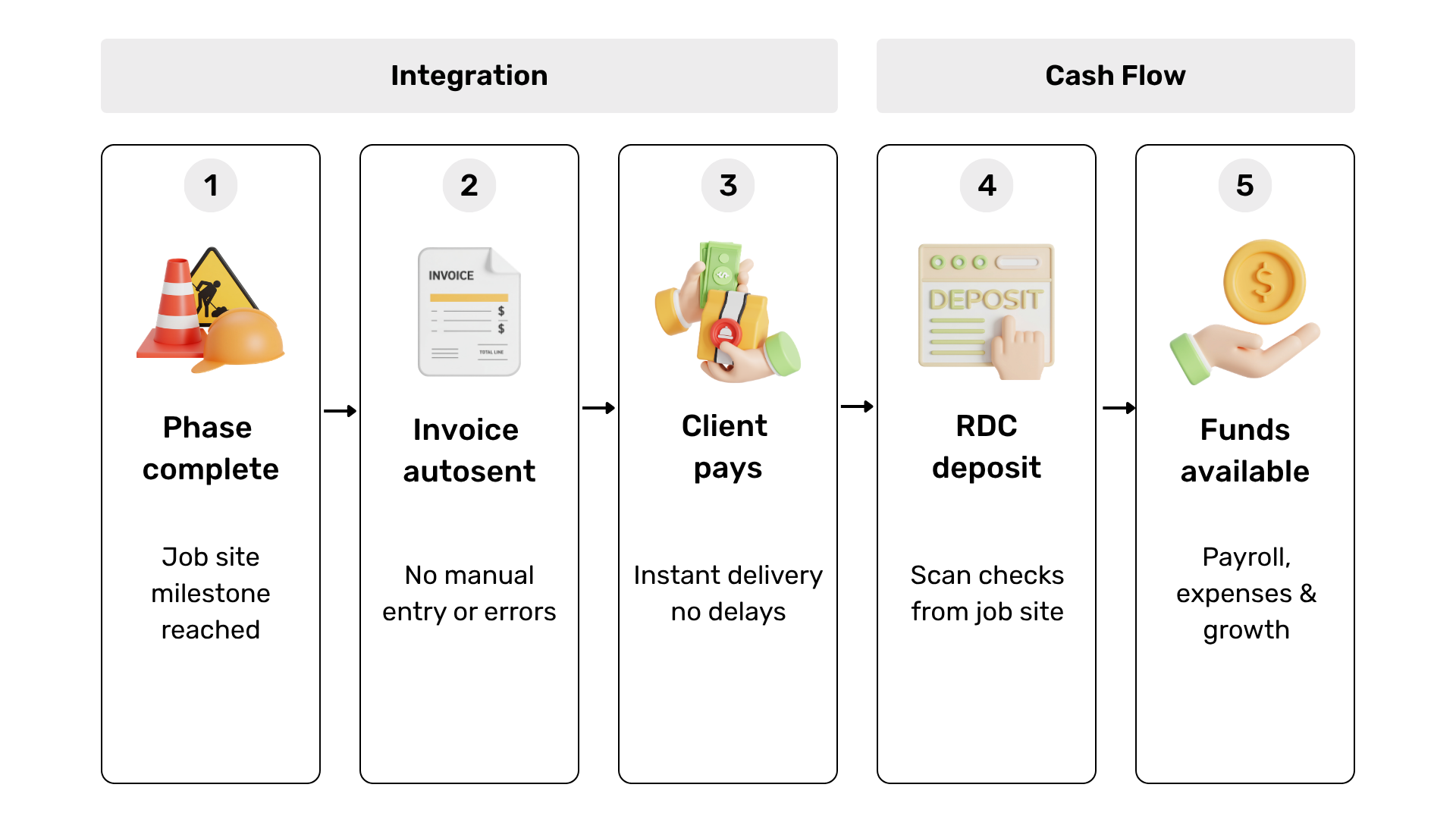
Integrations connect your payment systems with your project management tools. Instead of treating job site payments as a separate task, they become part of your workflow, and everything becomes less fragmented. When you complete a phase of work, the system automatically generates and sends the invoice. The client receives it right away and can pay without delay.
Integration reduces administrative workload. It also reduces human error: no duplicate data entry, no mismatched records across systems. Construction financial tools that work together create a smoother process. Disconnected systems tend to slow everything down.
Improving Cash Flow with Faster Deposits
Receiving payment from your clients is only part of the equation. But quickly gaining access to those funds matters just as much. Remote Deposit Capture addresses this common bottleneck. Instead of sending someone to the bank, you can use RDC to deposit checks directly from the job site.
Checks are still part of construction. That reality is not changing overnight. What can change is how quickly those funds become available. Faster deposits improve liquidity. That flexibility allows you to cover expenses, manage payroll, and move on to new opportunities without hesitation. Cash sitting in transit does not help your business.

Using Reporting to Drive Better Decisions
Most businesses track revenue. Or they definitely should, at least! But, fewer have real-time insight into cash flow across projects. Reporting tools provide that visibility. You can track payments by project, monitor timelines, and identify which clients consistently delay payment (Watch out, Susan! We see what you’re doing… now). When the data is clear, it’s easier to see patterns emerge.
This is where construction cash flow management becomes more structured. Forecasting improves because your numbers reflect current activity. You are not relying on outdated reports or assumptions. Better data leads to better decisions. It also reduces the stress of not knowing where things stand.
Security Considerations in Construction Payments
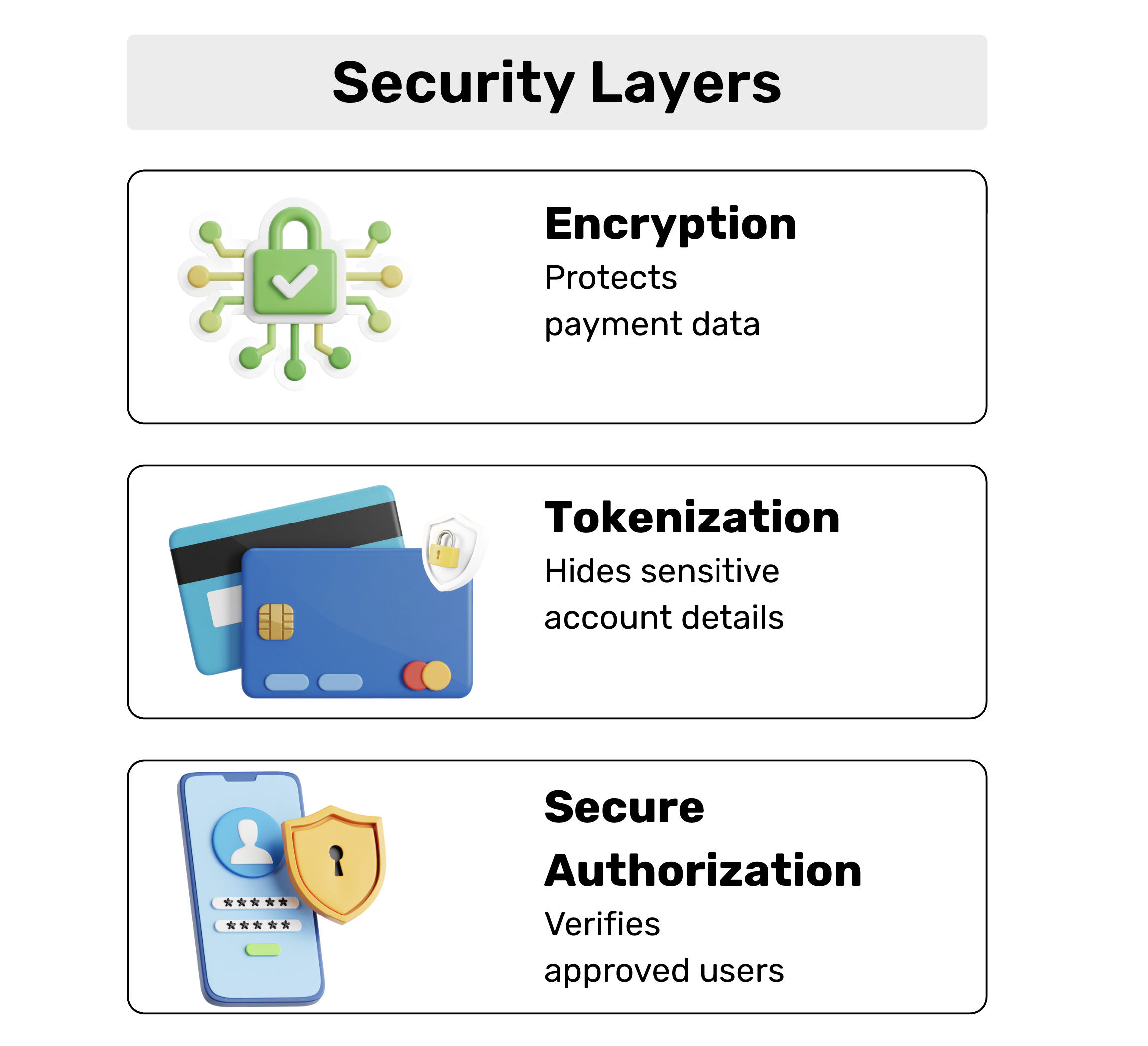
Construction payments often come in large amounts. Not that security on ANY transaction isn’t crucial, but these numbers alone make security even more of a priority. Digital systems need strong protection. Encryption, tokenization, and secure authentication are essential for protecting transactions.
Real-World Example Case Study
A regional construction firm faced these familiar challenges. They constantly had to chase delayed payments. Their manual invoicing made the workflow a nightmare, and limited visibility across multiple job sites kept things…chaotic, to say the least.
They implemented a more integrated approach using modern construction payment solutions. Let’s take a look at the case study below of implementing modern payment solutions with ECS Payments.

ECS Solution Stack Used:
Services included eCommerce, Integrations, Reporting, and Security.
Solutions included ACH, Credit and Debit, Remote Deposit Capture, and Banking.
How They Used It:
Payment processing was integrated directly into their project management system. Invoices were sent and paid digitally, eliminating delays associated with manual processes.
They enabled ACH payments for construction on large invoices, reducing transaction costs compared to card payments. Credit and debit options were used for smaller or urgent payments.
Field supervisors handled job-site payments by depositing checks instantly via Remote Deposit Capture. No more bank trips.
Reporting tools provided real-time visibility into cash flow across their multiple running projects. This change helped leadership track performance more accurately.
Outcome:
The impact was immediate. Payment cycles dropped from 30 to 45 days to under 10 days. Cash flow became more predictable. Administrative workload decreased, and there was a significant reduction in banking friction.
Same projects. Same clients. A much cleaner financial process.

Strategic Takeaway: Cash Flow Is a System, Not a Guess
It’s not a lack of work or opportunity that creates the struggle in the construction industry. These companies struggle when inadequate systems slow down their money flow.
Modern construction payment solutions improve timing with faster contractor payment processing, visibility through clearer reporting, and efficiency across your operation with better control over every job-site payment and its status.
There is also a long-term advantage. As projects scale, efficient payment systems make growth more manageable.
ECS Payments fits naturally into this shift by bringing together ACH for construction, flexible payment options, integrations, and reporting into one connected system. It simplifies how money flows through your business without adding unnecessary complexity.
If your current setup has you chasing too many payments and dealing with too much guesswork, it may be time to tighten it up. The right tools exist. But the difference comes from using them in a way that actually supports how construction businesses operate.
Contact ECS Payments to explore better construction payment solutions for your business today.
