A single second of delay or a confusing button can be the difference between a loyal customer and a permanent bounce. Most business owners spend thousands of dollars on high-quality product photography and social media marketing, only to lose the sale at the very last hurdle. When a customer reaches the checkout page, they are at their most vulnerable. They are preparing to part with their hard-earned money.
If the payment experience feels clunky, outdated, or intentionally vague, that customer will likely abandon their cart and never look to return. Trust is fragile, especially in the digital marketplace. Your checkout UI is the primary way you build or break that bond.

Experience Is Trust
Friction in the checkout process is a silent profit killer. It may be tempting to think your product is good enough that a potential customer will jump through any hoop to get it. But data suggests otherwise. According to research by the Baymard Institute, the average cart abandonment rate is over 70%.
Many users cite a long or complicated checkout process as a primary reason for abandoning their carts. It’s a matter of convenience but also of perceived security. When a payment flow is disjointed, users begin to wonder if the site is legitimate or if their data is being handled correctly.
Beyond just making things look pretty, your user experience serves as a vital compliance tool. Clarity and transparency are essential regulatory expectations. They also help in maintaining a Truth in Lending Act (TILA) aligned approach to merchant services.
By clearly disclosing terms, fees, and total costs upfront, you prevent “sticker shock” that leads to abandoned carts, chargebacks, and disputes later. A seamless payment experience is one in which the customer never feels they are being tricked into a transaction.
Key Elements of a Frictionless Payment Flow
According to a PricewaterhouseCoopers (PwC) report, 1 in 3 customers will leave a brand they love after just one bad experience. This statistic highlights the high stakes of digital design. Prosperous eCommerce is built on seamless interactions. The most successful eCommerce platforms follow a minimalist philosophy. Every extra form field you ask a customer to fill out at checkout is an opportunity for them to change their mind. If you do not absolutely need a customer’s middle name or their “how did you hear about us” data to process the charge, do not ask for it at the point of sale.
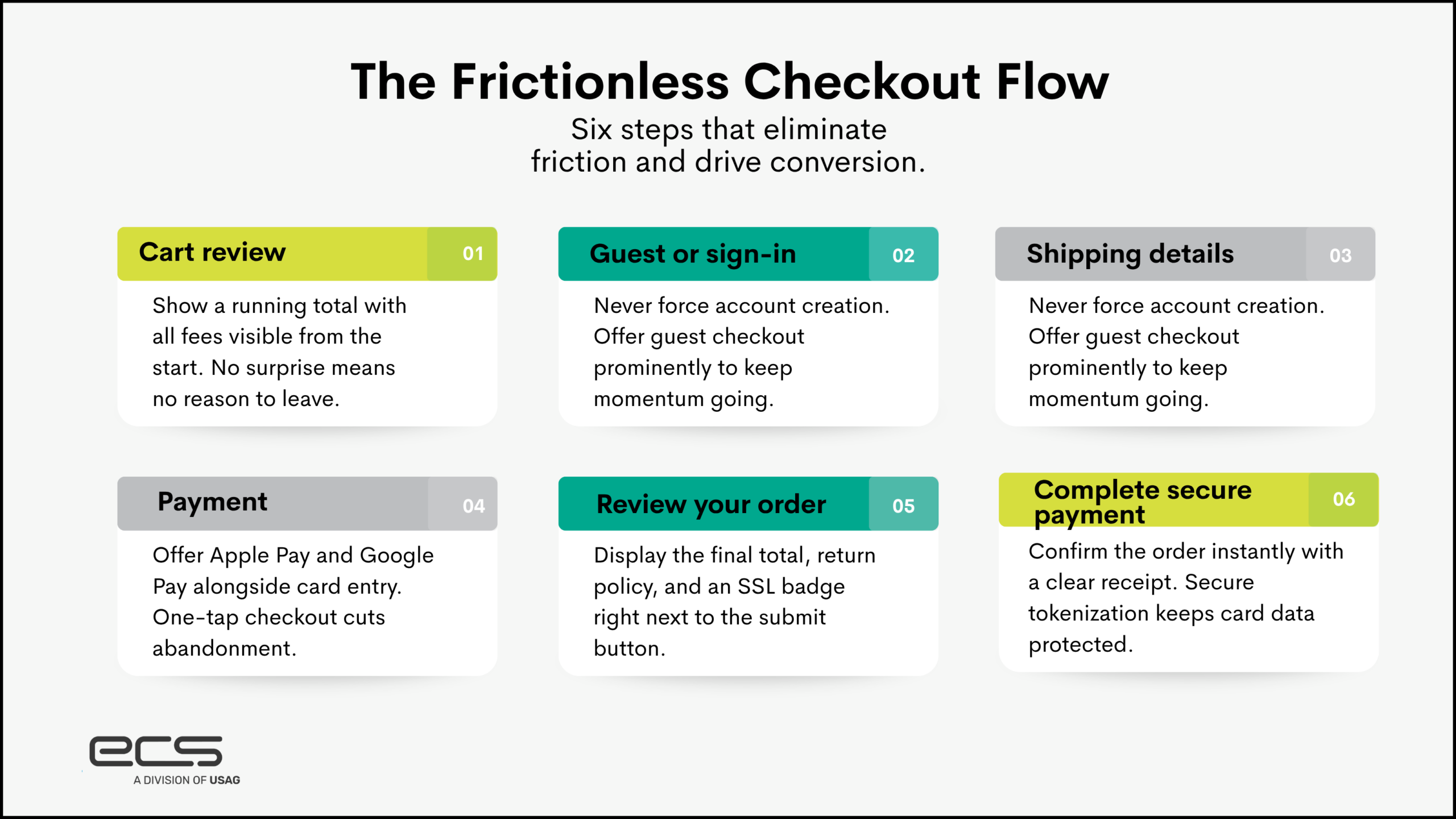
Implementing autofill capabilities for addresses and credit card details can shave significant time off the transaction. Integration with digital wallets like Apple Pay or Google Pay takes this a step further by allowing customers to authenticate a purchase with a fingerprint or facial recognition, bypassing manual data entry entirely.
Transparency regarding fees and policies is another cornerstone of a high-converting interface. When unexpected shipping costs or hidden service fees jump out at a customer on the final summary page, you are basically asking them to close the tab. It is frustrating, and it is arguably the quickest way to kill any confidence a buyer has in your brand.
To keep things transparent and actually build a trustworthy brand, your checkout interface needs to show a running total that updates the moment a user makes a selection. Honesty is critical for long-term retention. When a merchant is upfront about their refund policy and recurring billing terms, they are not just following the law; they are providing a superior payment experience that encourages repeat business.
Mobile-First Mindset
We have officially moved past the point where mobile optimization is an afterthought. In fact, 57% of 2024’s eCommerce sales happened on mobile devices. Still, many checkout pages feel like they are designed for a desktop. If a customer has to pinch and zoom to find the “Pay Now” button, your conversion rate will suffer. A mobile-first mindset requires large, thumb-friendly buttons and a responsive design that adjusts perfectly to any size screen.
Payment Security
With features like tap-to-pay and biometric authentication on smartphones, mobile security must be implemented for an optimum payment experience. Secure tokenization ensures that sensitive card data is never stored on the device or on your server. It protects both the merchant and the consumer.
Designing for Confidence
To ensure your customers have confidence in the security of your website, you need to make it obvious. High-resolution security logos and SSL certificates are the digital equivalent of a sturdy deadbolt on a storefront door.
These elements do not physically process the payment, but they do provide the psychological “green light” a customer needs to click submit. The placement of these trust signals is just as important as the signals themselves. Placing a padlock icon or a “Secured by” badge directly next to the CVV field or the final “Purchase” button reinforces the idea that the transaction is protected at the exact moment of highest friction.
The language you use, often called micro-copy, also plays a massive role in transparency and understanding. Skip the generic terms and get specific with your language instead. For instance, rather than a vague “Continue” button, try using something like “Review Your Order” or “Complete Secure Payment.” These small tweaks tell the user exactly what to expect next. Clarity goes a long way in settling the common fear of paying for something before they are actually ready to pull the trigger. Clear language regarding shipping windows and return windows should be visible throughout the flow, ensuring the customer feels fully informed and in control of their journey.
Testing and Optimization
No checkout design is perfect on the first try. The best way to understand what your customers want is to look at the data they leave behind. A/B testing lets you run two versions of your checkout page simultaneously to see which performs better. You might test a single-page checkout against a multi-step process, or you might experiment with the color and placement of your call-to-action buttons. Even small changes, like moving the “Apply Coupon” box to a less prominent position, can significantly reduce abandonment by preventing users from leaving the page to hunt for discount codes.
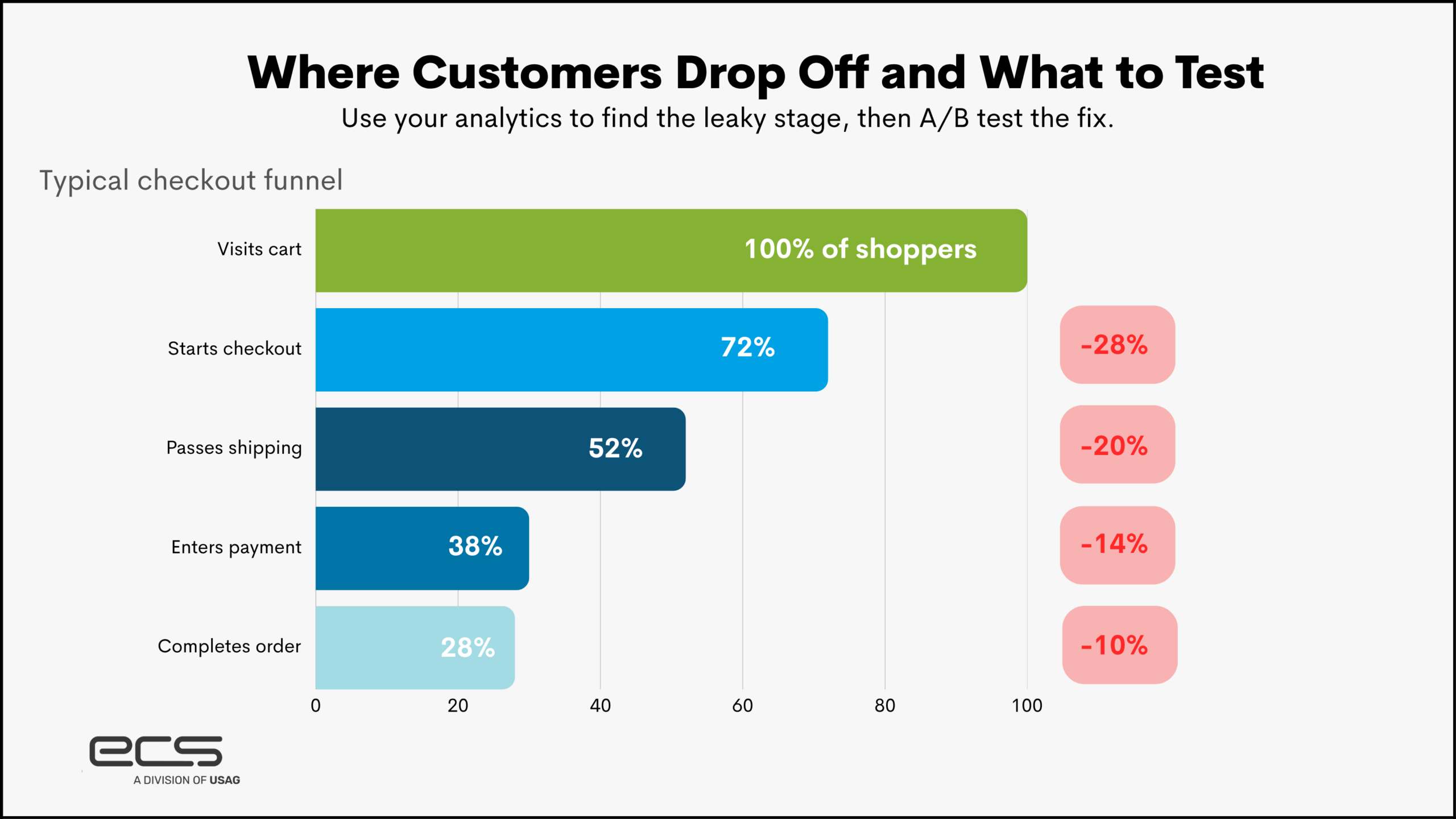
Interpreting your analytics responsibly means looking beyond just the final conversion rate. You should monitor where users are dropping off in the funnel. If over half of your users leave after seeing the shipping costs, then I’d bet confidently that your pricing strategy is the issue. If they leave while entering their credit card info, the form is probably too difficult to use on mobile. Continuous analysis and improvement of the payment experience is necessary. By staying curious about your data, you can refine your UI to better meet your audience’s evolving needs.
ECS Payments: Your Partner in Professional Processing
While UX and UI design are the visible parts of the transaction, the engine running beneath the surface is just as important. This is where who you choose as your processing partner becomes a strategic business decision. ECS Payments provides the robust infrastructure needed to support high-performance checkout flows. We understand that a merchant’s reputation is tied to the reliability of their payment gateway.
Unlike many processors that offer a “one-size-fits-all” solution, ECS Payments provides tailored integrations that allow for maximum flexibility in design and functionality. We prioritize the same values of transparency and education that we encourage our merchants to adopt. By offering stable, secure, and highly compatible API solutions, we empower business owners to build the best payment experience for their brand.
The Future of Invisible Payments
The ultimate goal of payment design is for the transaction itself to become “invisible.” In an ideal world, the customer is so focused on the excitement of their purchase that they hardly notice the mechanics of the payment. We are seeing this trend accelerate with the rise of embedded finance and subscription models. The payment experience is integrated into the product, requiring zero extra effort from the user. However, as the act of paying becomes more seamless, the visibility of trust must remain front and center.
Business owners who invest in their UI today will be the ones who lead the market tomorrow. The merchants who master mobile optimization and radical transparency will find their conversion rates and their customer loyalty reach new heights.
